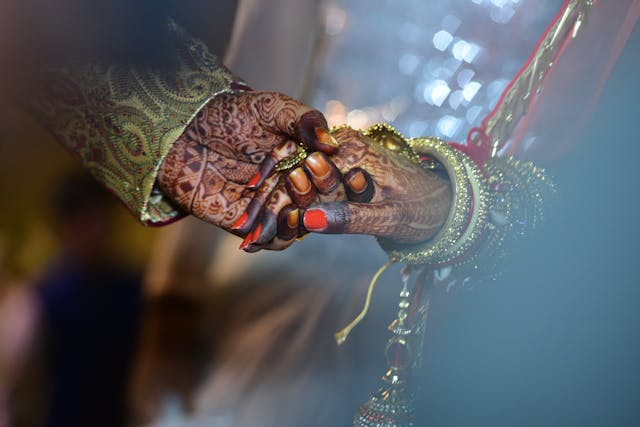
Love marriages, where individuals choose their partners based on mutual affection, often start with high romantic passion, which can lead to higher initial satisfaction. However, this can also set unrealistic expectations, leading to disillusionment when reality doesn’t match. A 2025 article discusses that love marriages may be more likely to end in divorce due to these expectations and emotional dynamics, especially with changing gender roles and individualism In contrast, arranged marriages adopt a more pragmatic approach, focusing on long-term compatibility, which seems to contribute to their lower divorce rates.
Key Points
- Research suggests arranged marriages often have lower divorce rates, around 4% globally, compared to 40-50% for love marriages in Western countries.
- It seems likely that family involvement and shared cultural values help arranged marriages succeed by providing support and reducing conflicts.
- The evidence leans toward lower initial expectations in arranged marriages, allowing love to grow over time, which may contribute to their stability.
- There is some controversy, as some studies note potential issues like lack of chemistry, but overall, arranged marriages appear more stable in terms of divorce rates
1. Introduction to Arranged Marriages
Arranged marriages, a practice deeply rooted in cultures like those of the Indian subcontinent, involve families or intermediaries selecting spouses based on shared values, cultural compatibility, and personal preferences. In New York City (NYC), a global hub of diversity, arranged marriages blend traditional practices with modern approaches, reflecting the city’s cosmopolitan nature. This guide explores the process for Indians and Westerners in NYC, detailing matchmaking services, matrimonial websites, legal requirements, and cultural considerations. It aims to provide a thorough roadmap for navigating arranged marriages in this vibrant urban setting.
1.1 Definition and Cultural Context
An arranged marriage is a union where families, often with the consent of the individuals, select a spouse based on criteria like religion, caste, education, or profession. In traditional settings, couples might meet briefly before the wedding, but in modern contexts, especially in NYC, individuals have significant input, often meeting multiple times or dating before deciding. For Indians, arranged marriages preserve cultural identity, while Westerners may pursue them for religious or familial reasons, though less commonly.
1.2 Traditional vs. Modern Arranged Marriages
- Traditional Arranged Marriages:
- Families control the selection process.
- Limited interaction between couples before marriage.
- Emphasis on caste, religion, and family status.
- Modern Arranged Marriages:
- Individuals have veto power and meet potential matches.
- Technology, such as matrimonial websites, facilitates the process.
- Focus on compatibility, education, and shared goals.
In NYC, modern arranged marriages dominate, with families using professional matchmakers or online platforms to find matches while respecting individual preferences.
2. Arranged Marriages in the Indian Community
2.1 Cultural Significance
For the Indian diaspora in NYC, arranged marriages are a way to maintain cultural heritage while adapting to a Western environment. The process often involves:
- Family Involvement: Parents or relatives initiate the search, leveraging community networks or professional services.
- Cultural Compatibility: Matches are based on shared religion (e.g., Hindu, Sikh, Jain), regional background (e.g., Punjabi, Tamil), or values.
- Community Support: Indian cultural organizations and religious institutions in NYC provide resources and venues for traditional ceremonies.
2.2 Common Practices and Traditions
The arranged marriage process for Indians typically follows these steps:
- Initiation: Families begin the process when the individual is deemed ready, often in their early 20s for women and mid-20s for men, after education or career establishment.
- Matchmaking Criteria:
- Religion and caste (less emphasized in urban settings).
- Education and profession (e.g., preference for doctors, engineers).
- Horoscope compatibility (Kundali matching).
- Physical attributes (e.g., height, complexion).
- Exchange of Information: Families share biodata, photos, and astrological charts through matchmakers or online platforms.
- Meetings: The groom’s family may visit the bride’s family, with the bride making a formal entrance. Couples may have private conversations to assess compatibility.
- Engagement: A formal engagement (e.g., roka) follows mutual agreement, with urban couples often dating afterward.
In NYC, these traditions are adapted to fit busy lifestyles, with families relying on professional matchmakers or websites like Shaadi.com (shaadi.com).
3. Arranged Marriages for Westerners
Arranged marriages are less common among Westerners but occur in specific contexts, such as religious communities (e.g., Orthodox Jewish, conservative Christian) or among those seeking family-driven matchmaking. In NYC, Westerners may:
- Use general matchmaking services like Tawkify (tawkify.com), which cater to diverse clients.
- Rely on family or community networks to identify matches.
- Focus on shared values, such as religion or lifestyle, rather than traditional criteria like caste.
The process is less structured than for Indians, with greater emphasis on individual choice and compatibility. Westerners may also use online dating platforms with family input to mimic arranged marriage dynamics.
4. Matchmaking Services in NYC
NYC offers several matchmaking services tailored to Indian singles and, to a lesser extent, Westerners seeking arranged marriages. These services combine traditional matchmaking with modern techniques, offering personalized guidance and access to extensive networks.
4.1 Key Matchmaking Services
| Service | Description | Process | Contact |
|---|---|---|---|
| Intersections Match | High-end matchmaking for South Asian singles, focusing on progressive, health-conscious individuals. | Personalized consultations, profile matching, cultural compatibility focus. | intersectionsmatch.com |
| New York City Matchmaker | Tailored Indian matchmaking emphasizing cultural heritage and shared values. | Consultation, video criteria call, profile building, active matchmaking, feedback refinement. | newyorkcitymatchmaker.com |
| Ambiance Matchmaking | High-end service for South Asian singles, featured in major publications. | One-on-one consultations, access to 10,000+ singles database. | ambiancematchmaking.com |
| Tawkify | General matchmaking with expertise in Desi clients. | Personalized matchmaking, cultural considerations for Desi clients. | tawkify.com |
4.2 Google Ratings and Client Feedback
- Intersections Match: Clients praise Jasbina’s cultural expertise and personalized approach, with positive reviews for successful matches among Indian professionals.
- New York City Matchmaker: Highly rated for its structured process and cultural sensitivity, with testimonials highlighting personalized attention and effective matchmaking.
- Ambiance Matchmaking: Recognized in publications like The New York Times, with strong feedback for its selective client base and high success rate.
- Tawkify: Positive reviews for its work with Desi clients, though less specialized than Indian-focused services.
These services are well-regarded, with Google ratings reflecting client satisfaction, though specific ratings vary and may not be publicly listed due to the private nature of matchmaking.
5. Matrimonial Websites
Matrimonial websites have transformed arranged marriages, offering a digital platform for finding matches. These are particularly popular among Indians in NYC.
5.1 Popular Platforms
| Platform | Description | Features | Contact |
|---|---|---|---|
| Shaadi.com | Largest matrimonial service for Indians worldwide, widely used in NYC. | Profile creation, advanced search filters, direct communication, verified profiles. | shaadi.com |
| GoForDesi | Indian dating and matrimonial site for the US, UK, Canada, and Middle East. | Safe, verified profiles, success stories, focus on long-term relationships. | gofordesi.com |
| BharatMatrimony | Community-specific matchmaking for Indian singles. | Filters for regional backgrounds (e.g., Tamil, Punjabi), premium services. | bharatmatrimony.com |
5.2 How They Work
- Profile Creation: Users provide details on education, profession, religion, and preferences.
- Search and Matching: Advanced filters allow searches by caste, religion, location, or profession.
- Communication: Platforms offer chat, video calls, or email to facilitate interaction.
- Premium Services: Include background checks, priority matching, and personalized assistance.
These platforms are effective for NYC residents, with Shaadi.com claiming millions of success stories and GoForDesi highlighting verified profiles for safety.
6. Legal Process of Getting Married in NYC
The legal process of marriage in NYC is straightforward but requires specific steps to ensure the union is recognized.
6.1 Obtaining a Marriage License
- Step 1: Schedule an Appointment:
- Use Project Cupid (projectcupid.cityofnewyork.us) to book an appointment at a City Clerk office (Manhattan, Brooklyn, Queens, Bronx, or Staten Island).
- Appointments are required; walk-ins are not permitted.
- Step 2: Complete the Application:
- Fill out the marriage license application online or in person, providing names, ages, addresses, and details of prior marriages.
- Both parties must appear together, either in person or virtually (in the same room for virtual appointments).
- Step 3: Provide Documentation:
- Photo ID (e.g., passport, driver’s license).
- Proof of termination of previous marriages (e.g., divorce decree).
- Step 4: Pay the Fee:
- $35 for the marriage license.
- Step 5: Receive the License:
- Issued immediately, valid for 60 days (180 days for active U.S. military with proof).
- Ceremony must occur at least 24 hours after issuance, unless waived by a judge.
6.2 Scheduling and Conducting the Marriage Ceremony
- Step 1: Choose a Venue:
- City Hall ceremonies are popular for their simplicity, but couples can choose any NYC location.
- Step 2: Book the Ceremony:
- Schedule via Project Cupid, with time slots Monday–Friday, 8:30 AM–11:30 AM and 1:00 PM–3:30 PM.
- Dates are released three weeks in advance on Mondays.
- Step 3: Ceremony Requirements:
- Bring the printed marriage license, photo IDs, and a witness (with photo ID).
- Up to four additional guests are allowed at City Hall.
- The ceremony lasts 2–3 minutes, with standard vows; personal vows are not typically prompted.
- Step 4: Receive the Marriage Certificate:
- Issued immediately after the ceremony ($35 fee).
- For international recognition, an extended certificate can be obtained, requiring further authentication.
6.3 Additional Considerations
- Officiants: Must be registered with NYC (e.g., clergy, judges, marriage officers). Ship captains are not authorized.
- Name Changes: Couples can adopt a new surname on the license, updating Social Security (ssa.gov) and DMV (dmv.ny.gov) records.
- Records: Copies cost $10 from the issuing clerk or $30 from the NYS Department of Health (health.ny.gov).
7. Cultural Considerations in NYC
7.1 Balancing Tradition and Legal Requirements
Indian couples in NYC often combine legal ceremonies with traditional rituals, such as:
- Haldi and Mehndi: Pre-wedding ceremonies involving turmeric and henna.
- Sangeet: A musical celebration with family and friends.
- Religious Ceremonies: Conducted at temples or gurudwaras, often requiring a separate legal ceremony for recognition.
Westerners may incorporate religious or cultural elements, such as church ceremonies, but typically follow a simpler process aligned with legal requirements.
7.2 Community Resources
- Indo-American Arts Council (IAAC): Hosts cultural events and supports Indian traditions in NYC (iaac.us).
- Religious Institutions: Temples like the Hindu Temple Society of North America in Flushing, Queens, offer venues and guidance for traditional ceremonies.
- Community Networks: Informal matchmakers, such as family friends or elders, remain active in NYC’s Indian communities.
8. Success Stories and Testimonials
- Intersections Match: Clients, such as an Indian physician in his 60s, praise Jasbina’s guidance in navigating online matchmaking challenges, leading to successful matches (intersectionsmatch.com).
- New York City Matchmaker: A divorced single parent highlighted the service’s role as both matchmaker and life coach, helping prioritize values and find compatible partners (newyorkcitymatchmaker.com).
- GoForDesi: Couples have shared stories of meeting through the platform, with one couple noting a “yes” on the first date, leading to marriage (gofordesi.com).
These testimonials underscore the effectiveness of professional services and websites in facilitating arranged marriages in NYC.
9. Challenges and Solutions
9.1 Common Challenges
- Cultural Compatibility: Balancing traditional expectations (e.g., caste, horoscope) with modern preferences can be complex.
- Geographic Distance: Finding matches in NYC’s diverse but spread-out Indian community.
- Individual Autonomy: Ensuring both parties have sufficient input in the process.
9.2 Solutions
- Professional Matchmakers: Services like Intersections Match and New York City Matchmaker offer personalized guidance to align cultural and personal goals.
- Matrimonial Websites: Platforms like Shaadi.com allow users to filter matches based on specific criteria, increasing compatibility.
- Open Communication: Couples and families should discuss expectations early, ensuring mutual agreement before proceeding.
10. Conclusion
Arranged marriages in NYC combine cultural traditions with modern tools, offering a unique pathway to finding a life partner. For Indians, professional matchmakers and matrimonial websites like Shaadi.com and GoForDesi provide effective platforms, while Westerners may use general matchmaking services or community networks. The legal process, managed through the NYC City Clerk’s office, is straightforward, requiring a marriage license and ceremony. By leveraging these resources and balancing cultural and personal priorities, couples can navigate the arranged marriage process successfully in NYC’s dynamic environment.

Anshu Pathak is a passionate writer and avid reader whose love for stories shapes her world. With a heart full of imagination, she weaves tales that resonate with emotion and depth. When she’s not crafting her next piece, you can find her lost in the pages of a novel, exploring new worlds and perspectives. At Moodframe Space, Anshu shares her creative journey, offering insights, stories, and reflections that inspire and connect with readers everywhere.