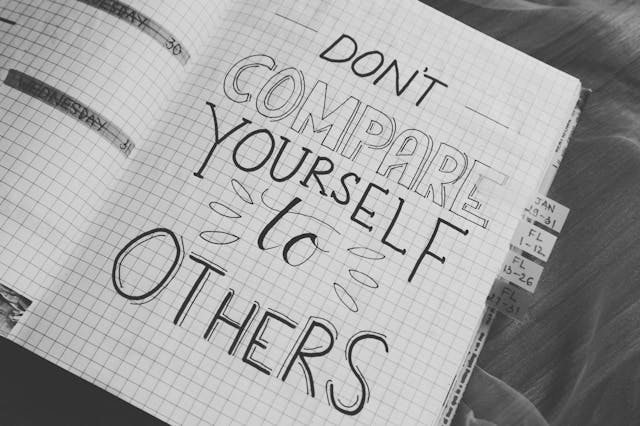
Social Comparison: How It Impacts You and How to Take Control

Did you know that we spend about 10% to 12% of our waking hours comparing ourselves to others? That’s around 2 hours or more of our day! Isn’t that crazy? Now whether we realize it or not, we’re actually hardwired to do that. It’s a skill we developed early in human history to navigate our environment—to adapt, to fit in, and to survive. And while comparison was once about survival, today it shows up everywhere—on social media, in conversations, and even while watching TV.

Understanding Social Comparison: A Double-Edged Sword

You’ve probably heard that “Comparison is the thief of joy.” While that’s often true, I’m here to tell you—this statement is incomplete. Comparison, by itself, is neutral. It’s just a reflection of our thoughts. In essence, it’s a tool—like a knife or fire—a knife can cut you, or it can cut something for you. Fire can burn you, or it can warm you or even cook you a delicious meal. See, the problem isn’t that we compare. It’s in how we interpret that comparison.

Now, we generally compare in two directions—up or down. And whether it becomes a trap or a drive depends on our mindset. Here’s how this plays out: When we compare ourselves to people we think are doing better—that’s us comparing up. If this comparison leads to self-pity, self-doubt, or an endless loop of “I’m never going to be good enough,” it’s a trap—because it triggers feelings of inadequacy and insecurity, or even envy. It reinforces limiting beliefs and self-diminishing thoughts. But, when comparing up sparks inspiration, invites learning, or pushes you towards something you aspire to, it becomes a drive—it fuels your growth. And instead of feeling less, you shift to, “What can I take from this?”

On the flip side, comparing down happens when we look at those we think are doing worse than us. It becomes a trap when it fuels arrogance—when we start looking down on others—or when it makes us lower our standards and settle for less. Do you see how that works against you? But, when comparing down makes us feel grateful and appreciative of what we have—and reminds us to have empathy and compassion toward others—it definitely becomes a drive. So, can you see how comparison is only the thief of joy if you let it?

The Real Impact of Comparison on Your Life

Here’s a distinction most of us fail to realize—comparison is never actually about the other person. We don’t compare because we want what they have. We compare because we’re afraid of what it says about us. And comparison doesn’t just mess with our self-worth—it spills into every aspect of life—work, relationships, and even parenting. It can show up anytime and catch you off guard.

Imagine catching up with a friend. They casually mention their exciting travel plans or an incredible trip they just had. Then they turn to you and ask, “What about you?” And suddenly, without even thinking, you find yourself stretching the truth and saying, “Oh yeah, we’re also thinking about a staycation soon!” When? Where? What?!! That’s how fast comparison hooks you. It’s not just about wanting what they have—it’s about suddenly questioning what you have. Can you relate?

It can even cause what I call ‘Milestone Anxiety’. Picture this—you’re scrolling on social media, and someone posts a huge achievement—career, fitness, family, whatever. Two seconds ago, you were fine, life was good… but suddenly, you’re feeling behind. I personally experienced this with potty training for my son. Before he reached that milestone, a lot of people had an opinion of when I should have started and how I should be doing it. It really made me question myself and even, I became harsh on him. I had to remind myself that, “I know my life best! I’m doing what I can.” And honestly? He’s not going to go to college in a diaper! (I actually said that to them.) And sure enough, he grew out of it. But can you see how milestone anxiety got to me—how it affected my judgment and even my behavior? I’ve seen marriages crumble because one partner was constantly measuring their life against others. The truth is—it’s not about the trips. It’s not about the money. It’s not even about the other person. It’s about this invisible pressure to match a moving target.

“Comparison reflects our fears, not others’ lives.”

Practical Steps to Take Control of Comparison

But here’s a secret— “Comparison is a perspective game.” And you’re better off mastering it in a way that serves you. So, how can you do that? Here are three quick steps to take back control when comparison hits and it isn’t working in your favor!

Step 1: Catch Yourself in the Act

You cannot stop what you don’t recognize. And comparison can happen FAST—so the trick is to interrupt it before it spirals. Maybe it’s in the middle of an Instagram scroll or during a conversation with your braggy coworker. Pause for a moment and recognize it. “Oops, I’m doing that comparison thing.” For me, I literally talk to myself: “Hmm, I see what’s happening here… I’m about to ruin a perfectly good day over nothing. Let’s not do that.” Or sometimes, I hear that buzzer sound in my head—”ERRNT! Watch out!” Whatever works for you—do it. It might sound silly, but it works. Especially if you keep at it. Because it’s not about fighting comparison; it’s about catching it before it takes over.

Step 2: Call It Out

Name what’s happening—verbalize your awareness. “Hmm… I’m feeling jealous.” Or maybe it is “I’m comparing my worst to their best.” “I’m doubting myself.” See, this little mindfulness trick of pausing and putting a name to it gives you a split-second of distance and sometimes, that’s all you need to wake up and take back control. Whatever you’re feeling or thinking isn’t necessarily good or bad—it just is. And all you need to do is to acknowledge that it exists in the moment. The point is to detach from the emotional charge of comparison and to simply observe what’s happening.

Step 3: Redirect Your Energy

If the comparison is touching on some of your insecurities or negative emotions, how can you turn it around? There are a number of ways you can do that: You can start by switching your focus in the moment to what you have versus what you’re missing because engaging in gratitude is always a great idea. Or, you can remind yourself that your journeys and circumstances are different. Or, you can just simply recognize that you are only seeing what they choose to share and you don’t have the full picture. Another powerful way to do that is for you to remind yourself of your uniqueness. Because whether you allow yourself to see it or not, you are unique! Reinforce that in yourself: “They are great and I am too—in my own way”. If anything, this is your sign to ‘practice seeing the good in you’ because this is the one skill that unlocks your self-mastery. And to physically redirect your energy, try a simple movement or a gesture to snap out of it. You can literally snap your fingers, shrug your shoulders and take a deep breath, or shake it off your body. Whatever helps you to reset—just do it.

Reflective Methods to Turn Comparison Into a Positive Force

If after these 3 steps you still feel the weight of comparison, and you want to leverage on what’s happening and dig deeper, here are 3 self-reflection methods, you can use:

The Curiosity Method

Number 1 is what I call The Curiosity Method. Ask yourself, Why? “Why am I doing this?” And don’t stop at the first answer—ask “why” at least three times to get to the root of your feelings. Why did I say we were planning a staycation? Because I didn’t want to seem like I was missing out. Ok. Why does that matter? Because I want to feel like I belong. Ok. Why do I feel like I don’t belong? Because I tie my worth to how my life looks and not how it actually feels. TADA! You got it. It was never about the vacation. It was about validation. Or maybe when you ask yourself ‘Why does that matter?’ you realize you actually haven’t had a break in a while and that you need to prioritize rest. In that case, the comparison wasn’t about feeling behind—It was an eye opener, a reminder of the importance of downtime and connection. By engaging in curiosity and asking why repeatedly, you get to the core of it, whether it’s a value, a habit, reminder, pattern, or fear that is driving your emotions. Once you get to the bottom, acknowledge it and move forward.

The “Who Cares?” Method

The second method I use is to Ask “Who Cares?” To be clear, it’s not meant in a dismissive way like “Ugh, who even cares?!”. It’s more of a quick reality check to help you understand why something is bothering you. Because a lot of times we get caught in comparing ourselves over things we don’t even actually value—we think we should have XYZ because society, family, friends expect it. But by asking “Who cares?”, you might realize, “Wait, do I truly care about having the Pinterest-perfect home, or am I just feeling like I’m supposed to?” If the honest answer is “No one that matters cares including me,” then give yourself permission to drop that comparison. If the answer is “Well, I care because this is important to me,” then great – now you know this is a personal interest or goal, and you can shift from comparison to action: “how do I get there?”. Essentially, “Who Cares?” helps differentiate between comparisons that are tied to your authentic goals versus those tied to external approval. It’s a quick way to snap back to your priorities.

Reframe Comparison as a Learning Opportunity

The third and final method is to Reframe the Comparison into a Learning Opportunity. Turn on the learner mode. Instead of thinking, “They’re better than me,” ask yourself, “What can I learn from them?” Think of them as a case study or as a sample of what’s possible for you. Shift your focus from comparison to inspiration. What techniques do they use? What skills have they developed? How often do they practice? This mental pivot transforms the other person from a perceived threat into a mentor-by-example (even if they don’t know it). It shows you what’s possible with consistency and dedication. What can you take from their journey to fuel your own growth? Is there a small step, a new habit, or an approach that could help you get closer to your own version of success?

Making Comparison Work for You

Now, these methods are not a one-size-fits-all, try what resonates with you and see what sticks. Or better yet—drop a comment and share what works for you! Let’s all help each other break free from disempowering comparisons. And of course, you can always share this video (and don’t forget to subscribe). Remember, comparison is a natural human tendency. The goal isn’t to never compare—we’ve established that’s unrealistic. The goal is to catch yourself in the act and pivot. Either stop the comparison or turn it into something positive. Because here’s the thing: The difference between those who suffer from comparison and those who control it comes down to mindset and habits. Are you going to let that 10–12% of your thoughts steal your joy, or are you going to recruit them to improve your life?

Let’s be real—no one has it all figured out. Not even the people you admire the most. They have their own doubts, insecurities, and struggles, just like you, trust me! If you keep measuring yourself against others, you’ll never feel satisfied—because the truth is, there will always be someone ahead of you and someone behind you. The real question is: Will you let that fuel you, or will you allow it to bring you down? I know you’ve probably heard this a million times, but seriously—instead of measuring yourself against others, look at how much you’ve grown. Your timeline is yours. It’s You vs. You.

So the next time you catch yourself in the comparison cycle, remember you have the power to turn it into a tool. Because in the end, it’s all about your perspective and the story you tell yourself. Trust me, this shift can make all the difference in your life! Now, go out there and beat your own yesterday! And always remember: You’ve Got This! I’ll see you in the next one. Ciao!

Frequently Asked Questions About Social Comparison

What is social comparison and why do we do it?

Social comparison is when we evaluate ourselves by comparing our abilities, achievements, or situations to others. It’s a natural tendency rooted in our evolutionary need to navigate our environment, adapt, and survive.

How does social comparison affect mental health?

Social comparison can lead to feelings of inadequacy, self-doubt, or envy when comparing up, or arrogance when comparing down, impacting mental health negatively. However, when used as a drive for inspiration or gratitude, it can positively influence well-being.

How to stop comparing yourself to others on social media?

To stop comparing yourself on social media, catch yourself in the act, name the feeling (e.g., “I’m feeling jealous”), and redirect your energy by focusing on gratitude, your uniqueness, or what you can learn from others.

What are the benefits of positive social comparison?

Positive social comparison can spark inspiration, encourage learning, fuel personal growth, and foster gratitude and empathy, turning comparison into a drive rather than a trap.

How to overcome milestone anxiety caused by comparison?

Overcome milestone anxiety by recognizing comparison triggers, verbalizing your feelings, and redirecting your focus to your unique journey and progress, using methods like curiosity or reframing comparisons as learning opportunities.

Why does comparison make me feel behind in life?

Comparison can make you feel behind because it creates an invisible pressure to match others’ achievements, often tied to societal expectations or personal fears about self-worth, rather than focusing on your own timeline.

How can I turn comparison into a tool for self-improvement?

Turn comparison into a tool by catching and naming the comparison, redirecting your energy to gratitude or learning, and using reflective methods like asking “Why?” or “Who cares?” to align with your authentic goals.

How to Enforce Boundaries Effectively: 5 Proven Steps to Stand Firm

Setting boundaries is a crucial step toward self-respect and mental well-being, but the real challenge lies in enforcing them. If your boundaries keep getting ignored, you’re not alone. Many struggle with maintaining boundaries when people or circumstances push back. In this article, we’ll explore five powerful and effective steps to ensure your boundaries are respected, along with a mindset shift that will transform how you approach boundaries forever. Let’s dive into how to enforce boundaries and take control of your time, energy, and peace of mind.

Why Boundaries Matter for Your Mental Health

Boundaries aren’t just words—they’re a reflection of your needs, values, and priorities. They’re about respecting yourself and teaching others how to treat you. With trends like the soft life and quiet quitting, more people are realizing that boundaries aren’t a luxury—they’re a necessity. When you let a boundary slide, you’re essentially allowing someone else’s request to take the front seat, while your needs get pushed to the back. Over time, that can leave you feeling frustrated, stretched thin, and even resentful.

Your boundaries keep getting ignored? You’re making this mistake: thinking that setting them is enough. Setting boundaries is ironically the easy part. Enforcing them, and following through? That’s where things fall apart. Let’s be real, how many times have you set a boundary, only to have it crossed? People push, circumstances test, and before you know it—you give in and you self-sabotage. Sounds familiar? Here are the five key steps to enforce your boundaries when life and people push back.

Step 1: Know Your Why for Stronger Boundaries

Here’s something most people get wrong about boundaries: they think boundaries are about controlling others. But, they’re not! Boundaries are about respecting yourself and teaching others how to treat you. Ask yourself: “Why did I set this boundary in the first place?”, “What am I trying to protect—my time, my energy, my peace of mind?”, or “What am I giving up by not respecting it?”, “How does this boundary serve my well-being and my mental health?” Keeping your “why” front and center gives you clarity and makes standing firm a lot easier.

Take this for example—if you’re naturally a great planner, you might find yourself being the go-to person for work events, family gatherings, and social plans. And while you genuinely want to help, you start realizing that every “yes” to planning another event means you’re saying “no” to your downtime, your quality time with family, and even your own emotional and physical well-being. When the guilt kicks in, shift your focus! Instead of thinking about what you’re saying “no” to, remind yourself of what you’re saying “yes” to for yourself! Your boundaries aren’t about shutting people out; they’re about not leaving you out.

Step 2: Show Them, Don’t Just Tell Them

Many of us communicate our boundaries out of respect, kindness, and being proactive—yet somehow, we still find that some people don’t take them seriously or constantly challenge them. If your boundaries keep getting ignored, it’s probably because you’re sending mixed signals. Boundaries aren’t just about saying them—they’re about showing them. For example, if you’ve told your workplace you’re unavailable on weekends, but you still reply to emails—you’re training them to expect you to.

Here’s what you can do instead: set an autoreply: “Thanks for reaching out. I’ll get back to you during working hours.” Or you can say, “I’m unavailable at the moment, but I’ll be happy to connect on Monday”. The key is to stick to your cut-off time, no exceptions. People will always push boundaries—it’s how you respond that sets the tone. Now, I know that unique and unexpected situations and emergencies occur. If you choose to break your boundary during such instances, make sure you note it and own it. Note it so you know when you are making a conscious flexibility decision instead of turning it into a habitual compromise, and own it so you don’t beat yourself up and feel drained.

Here’s a pro tip: when it comes to boundaries, the “show them” approach works especially well with manipulative or narcissistic individuals who push limits to see how far they can go. When you show them and stay consistent, you take away their power to manipulate.

Step 3: Have an Accountability Partner

We’ve all been there—setting a boundary and then slipping when no one’s watching. That’s where an accountability partner comes in. Having someone to gently remind you when you’re slipping can be the push you need. Whether it’s a friend, a partner, or someone you trust. Just knowing that someone will check in with you helps you to stay on track. My husband is my accountability partner. He’s the one who calls me out when I start replying to work emails at night—after I promised I wouldn’t. He would gently say, “I’m only reminding you.” It’s a simple cue that we’ve agreed on and that works without feeling like a criticism.

Here’s a fun way to think of your accountability partner—they are your alarm clock! You might not enjoy listening to them, but you know you have to, to stay on track! Just make sure you set a gentle tone that you can tolerate.

Step 4: Practice Assertiveness Skills

Saying ‘no’ isn’t easy—we worry about being seen as rude or selfish. But here’s the thing: assertiveness isn’t about being harsh; it’s about being clear, firm, and kind. If assertiveness doesn’t come to you naturally, the secret lies in practice! And here are some simple yet firm phrases you can use to assert your boundaries confidently. You can say: “I appreciate your request, but I can’t commit to it right now.”, or “It doesn’t seem that this will work for me, but here’s what I can do.”, an alternative is: “I’m going to have to pass on this one as it really doesn’t work within my schedule.”

Now, if someone keeps pushing, use a technique that is called The Broken Record Technique. And it’s about calmly repeating your boundary without over-explaining yourself. Here’s an example: Imagine a friend keeps inviting you to a weekly event you’re not interested in, but they just won’t take no for an answer. Instead of getting frustrated or over-explaining, you can simply say: “Thank you, I won’t be able to join this time, but I hope you have a great time!” If they insist and persist, just repeat calmly: “Like I mentioned, I won’t be able to make it, but thanks for thinking of me!” And if they still keep at it, follow with: “I really can’t make it, but I appreciate the invite.” Pairing this technique with strong body language—such as maintaining eye contact, standing tall, and using a steady tone—doubles its effectiveness. Remember, being assertive is about clarity, not disagreement.

Step 5: Distance Yourself When Needed

Sometimes, despite your best efforts, there will be people who won’t respect your boundaries. If someone keeps crossing your boundaries, they’re probably not just forgetful—they’re testing you. It’s up to you to show them that you mean what you say. When needed, create emotional and physical distance—limit interactions, minimize details, and focus on protecting your energy. Distance is about creating the space you need to reinforce your boundary without constant resistance.

For example, if someone keeps making passive-aggressive comments about your choices or offhanded comments about your parenting style, you can respond with something like, “Thanks, I’ve got it covered.” And then? Watch if that makes any change… If not, create a little more space, less conversation, fewer details, and eventually, a larger distance. And, in some cases, an actual break of relationship. Sometimes, the best way to enforce a boundary is by walking away.

The Mindset Shift That Changes Everything

Picture this: Imagine you’re a turtle… a turtle without its shell. How would you feel? Vulnerable? Exposed? Insecure? Constantly on the edge, worried about what’s coming at you from every direction? Hyper-aware of what could hurt you?… Feel that? That’s what life feels like without boundaries. But with boundaries, you put that shell back on, and suddenly everything changes. You move confidently, protected, at your own pace, in your own direction. So, the next time you hesitate to enforce your boundary, remember the turtle… your boundaries are your shell. Wear them proudly.

“Boundaries are your shell—wear them proudly to protect yourself.”

At the end of the day, enforcing boundaries is about consistency. The more you practice, the more natural it becomes. So remember the 5 steps I shared with you: 1. Know your why—get clear on what you’re protecting, 2. Show them, don’t just tell them because actions speak louder than words. 3. Have an accountability partner to get the support you need to stay on track. 4. Practice assertiveness skills to set boundaries with confidence, and 5. Distance yourself when needed because sometimes, space is the best answer.

FAQ: Long-Tail Questions About Enforcing Boundaries

How do I enforce boundaries without feeling guilty?

When guilt creeps in, remind yourself of your “why.” Boundaries protect your time, energy, and mental health. Shift your focus to what you’re saying “yes” to for yourself, like downtime or well-being, rather than what you’re saying “no” to.

What are effective phrases to assert boundaries confidently?

Use clear, firm, and kind phrases like: “I appreciate your request, but I can’t commit to it right now,” or “I’m going to have to pass on this one as it really doesn’t work within my schedule.” Practice these to build confidence.

How can I deal with someone who keeps ignoring my boundaries?

If someone repeatedly crosses your boundaries, use the Broken Record Technique—calmly repeat your boundary without over-explaining. If they persist, create emotional or physical distance to protect your energy.

Why is it hard to enforce boundaries with manipulative people?

Manipulative individuals often test boundaries to see how far they can go. Consistently showing your boundaries through actions, not just words, removes their power to manipulate.

How does an accountability partner help with boundary enforcement?

An accountability partner gently reminds you when you’re slipping, helping you stay consistent. They act like an alarm clock, providing support without judgment to keep you on track.

How to Be More Sociable: Proven Tips to Make Friends as an Adult

Making friends as an adult can feel daunting, especially after age 29 when research suggests our friendships may start to decline due to parenthood, boredom, or apathy. Whether you’re an introvert, ambivert, or extrovert, learning how to be more sociable is a skill that can boost your happiness, health, and confidence. This article provides actionable steps to help you build meaningful connections, even if you struggle with social anxiety or feel like you’ve lost touch with friends. Let’s dive into the science-backed strategies to make friends and be more outgoing.

Understanding Friendship: The Science Behind Connection

Hello friends, I thought today we would play some friendship trivia. You ready? Okay, question number one: What is your peak friendship age, the age you’re gonna have the most friends? According to the research, the peak age for friends is age 29. After that, our friendships steeply decline, moving parenthood, boredom, apathy. After age 29, supposedly, we lose our friends.

Question number two is, how long does it take to make a friend? According to researcher Alan Hendrickson, it takes six to eight meetings to consider someone a friend.

Here is my last trivia question: How long does it take to move a casual friend into the real deep friendship category? According to the research in a study called “How Many Hours Does It Take to Make a Friend,” it takes 90 hours to upgrade someone from a casual friend to a real friend. 90 hours, like, that is a long time. I don’t even know if I’ve spent that much time with my mom.

“Building deep friendships takes time, but vulnerability accelerates connection.”

Why Being Sociable Matters

If these trivia questions confound you and you’re watching this video because you want to be more sociable, you want to be maybe a little more outgoing, maybe a little more confident, I am so glad you clicked. So, this is a huge need that I had in my life as well, and there’s a couple reasons we like to make friends. First, friends are nice; they make us feel the kind of warm and fuzzies inside. Second, research proves it: the more people we have in our life, the more good, deep, quality relationships, the better our happiness, the better our health. And then, lastly, if you’re around that age of 29 or a little older, you might be thinking, where did all my friends go? Without summer camp and college and school and camps and organizations, it’s hard to make friends as adults.

Step-by-Step Guide to Being More Sociable

Step 1: Start Fresh to Overcome Social Baggage

So, in this post, I want to give you some very concrete steps to be more sociable in an authentic way, even if you’re an introvert. Okay, how to be sociable, step number one is start fresh. So, I don’t know about y’all, but I have a lot of social baggage. I think it’s my social anxiety or maybe my recovering awkward person-ness, but I tend to bring a lot of baggage to my social interactions. This is you if you say things like, I’m so boring, no one likes me, I’m always so awkward. If you say things like that, you are not alone.

The reason this happens is because we tend to think of one bad social interaction like it’s a rule. So, one time you talked to someone, and it didn’t go well, and you’re like, I can never talk to that kind of person again. Or one time you went to a networking event, and it sucked; wasn’t you, was them, but you’ll never go to a networking event like that again. Or you tried a conversation starter one time, and it didn’t really work, and so you’re like, I’m never going to try that conversation starter again. One bad social experience does not make a rule.

So, the most important thing, before I give you all these amazing tips to come, is that I want you to start fresh. Everything you think you know about being social, everything you think you’ve tried once, twice, or three times before, I want you to start fresh now, be open-minded because I have some really good steps coming.

Step 2: Set Specific Social Goals

How to be social, step number two. Okay, now as we get into the real stuff, I want you to set some social goals. It’s really hard to set a goal that’s broad; for example, if you’re like, I really want to lose some weight, that’s not specific; it doesn’t give you anything to actually work towards. If you say, I’m going to eat healthier by ordering X, Y, Z, or I want to lose X amount of weight, that’s a much more specific goal to work on. I want you to do the same thing with friends.

So, why do you want to be more sociable? Why do you want to be more outgoing? I want you to dig a little deep here. I found there are three patterns. I have a lot of people who come to my website looking to be more social, and there’s three different reasons they usually do this. One is, they want to level up existing relationships. Maybe they’re casually seeing the same people over and over again, or they work with their colleagues, but they’d like to actually be friends with their colleagues. Or they have a crush on someone, and they want to level up the relationship. So, the first goal could be, who are three people you want to level up with? Three people you want to be more sociable with.

The next thing that I often see is, you want new friends. Maybe you’ve changed in your life, maybe you’ve moved to a new city, maybe you’re just ready for something different. That means you want to make new friends or new kinds of friends. I want you to think of three different kinds of friends you want in your life. And this is a little bit weird way to think about friendships, but do you want someone you could always go hiking with? Or do you want someone that you could go to lectures with? Or do you want someone that you could work out with? I want you to actually get specific about the kind of friend you want. Write down three different kinds of friends you might want.

Lastly, why do you want to make friends? Are you looking to make friends to feel more confident, to feel more fulfilled, to feel more happy, to feel less lonely? I want you to write that down too.

Step 3: Be More Outgoing with Low-Pressure Practice

Okay, how to be social, step number three: be more outgoing. Now, this tip actually works for my introverts as well. So, extroverts love being outgoing; they get energy from being around people. Introverts get energy from being alone. What I want you to do, whether you’re an introvert, ambivert, or extrovert—by the way, I’m an ambivert, somewhere in between—is to be more outgoing strategically, specifically with low-pressure practice.

The biggest mistake that people make when they’re trying to be social is they start with experiences and people that really matter to them. This is actually the wrong way to do it because it’s too much pressure. Don’t start practicing conversation with your crush; that’s really nerve-wracking. Don’t start practicing how to build rapport with your boss; that’s way too hard. I actually want to give you three specific situations for step number three that I want you to practice being more outgoing. These are safe spaces; they’re also going to set you up for more success.

The first thing is, go get more haircuts. Hairdressers and barbers are the secret to being sociable. The reason for this is because, one, they’re a captive audience. If you’re in their chair, it’s in both of your best interests to get along. Two, they’re usually very good with people; they talk to people all day, so they’re the best at making smooth small talk. If you’ve really struggled with conversation starters or small talk or sharing stories, practice with a barber or hairdresser. Go get a shave once a week, go get a haircut every three weeks, just so you can practice the art of the cold open all the way to conversation. You can also try going to the same hairdresser and see if you can get deeper and deeper and deeper, hitting those 90 hours. Or you can try going to different hairdressers and different barbers to see if you can nail the first impression, depending on your goals.

Second, instead of doing one big grocery shop at the end of the week, I actually want you to pop into somewhere once a day. So, maybe you visit your gym every day, or maybe you pop by and get some milk or some bread, or maybe you see your postman every day. I want you to think of one experience you can do every day with a low-pressure person, someone in your life who you don’t have to sell them or become their best friend or turn them into your lifelong partner. You just want to have a nice relationship. Those daily interactions are like flexing a muscle purposefully. This is great for introverts. So, introverts, you like to prepare for your social experiences; it’s really hard when they’re just coming at you all at once. I want you to pick one social experiment every day that you can do repeatedly. So, popping into the local corner grocery store and always talking to the checkout person, or always making sure you talk to the postman when he comes by, or always talking to the receptionist at your gym. That one moment is going to help you A, pre-prepared conversation starter, and B, practice the art of gentle banter, which is actually a really important social skill.

And last one here is, talk to delivery folks and service folks—waiters, waitresses. They actually have a really long day, so the more that you can be kind to them, think of good conversation starters, or just say gentle, easy banter, the better. And they’re free practice, low-pressure practice. So, here are three different ways you can flex that outgoing muscle in a way that feels comfortable for you before you take it to the really important relationships.

Step 4: Use Great Conversation Openers

Step number four: use great openers. Here’s the biggest mistake I see in every kind of social interaction, and I see this with people who desperately are trying to be social, and it doesn’t always go so well. They start with something accidentally negative. So, they breeze into a networking event, “Oh my gosh, the weather is terrible,” or they got in a conference call, “Oh my gosh, it was so trafficky getting here,” or “I’ve been so busy lately, haven’t you,” or “It’s been so stressful at work.” All of those openers start the interaction on a low, on a negative. They seem like throwaway or castaway comments, but actually, it’s really hard to recover charisma once you’re already low.

When you say you’re stressed, the other person then thinks, yeah, I’m kind of stressed too. Or when you breeze in because it was terrible weather, they think, yeah, I guess it is pretty terrible weather, and then you’re stuck. I want you to actually open every interaction with something slightly positive. This is two things: one is, it primes you before you even arrive somewhere to think more positively. If you’re like, okay, what’s good, what’s good, what’s good, you immediately turn your mind into a more optimistic place, which makes you more open-minded and more curious and more charismatic. The second thing that this does is, it also primes the other person to think more positively. So, one small positive thing: “Wow, what a cool venue,” “Hasn’t the weather been great,” “I was so excited about this event,” “It’s so good to see you.” All of those small positive things are gonna set you up for a high and a better interaction.

Step 5: Activate Your “Like-Dar” for Connection

How to be sociable, step number five is use Like-Dar. So, Like-Dar is a word I created; I love creating new words, which is a combination of like and radar. There’s a scientific concept called similarity attraction effect. Now, most people think of the cliché, opposites attract, but actually, similarities attract even more, and research proves it. We like people who are like us, who have similar interests to us, who do things similar to us, who dress similarly to us. And so, when I’m with someone, I’m always on Like-Dar, and this is key to being more sociable.

When you’re with people, I want you to think of, how can I find as many similarities as possible? When you’re in an interaction, when you’re talking to someone, if you ever run out of things to say or you have that awkward silence, I want you to ask questions that look for similarities. This could be, “What are you up to this weekend?” hoping that maybe you’ll be doing the same thing, or “Have any big plans for the holidays coming up?” and then you can share holiday memories or holiday experiences, or “What do you do for fun?” or “Working on any personal passion projects recently?” All of those questions are getting you to some place where you can say, “Yes, me too, I love that show, I love that book, I love to hike, I love to garden.” All those times that you say, “Me too,” or “I like that too,” it creates a bond.

This is my secret key to never running out of things to say. If I am always searching for “me too’s,” and typically my goal is that in every interaction, I get at least three “me too’s,” I always have questions I can ask because I’m searching for something. That searching is the definition of being curious. Or, if you heard the famous quote by Dale Carnegie, “To be interesting, be interested.” Like-Dar is the key to that.

Step 6: Wear Vulnerable Colored Glasses

How to be sociable, step number six: wear vulnerable colored glasses. So, if you heard the phrase, wear rose-colored glasses, seeing things positively through a rosy lens, I actually like seeing things through a vulnerability-colored lens. I know that’s not nearly as cute, and it’s a lot longer, and it’s kind of clunky, but you get it. So, vulnerability is actually the key to building connection.

That study that I mentioned at the very beginning that said that it takes 90 hours to upgrade someone to a real friend, I think my secret workaround to that, getting it to be maybe 40 hours or 50 hours or even 30 hours, is sharing vulnerability early on. This turns quantity friendship time into quality friendship time. And I am always looking for ways to share small vulnerabilities. I don’t want you to walk up to someone and be like, “Can I tell you my life story? I have lots of trauma,” or “I have a lot of baggage, can I tell you all about it,” or just verbal vomiting all the bad things that are happening in your life. I do not want you to do that.

I do want you to mention small, honest vulnerabilities. They sound like this: “I was so worried I wouldn’t know anyone tonight, but I’m so happy you’re here,” “I’m a recovering awkward person, so it’s so nice to meet someone outgoing like you,” “I seriously almost canceled tonight to watch Netflix, but you made it all worth it,” “I recently googled how to be more social, and I found this amazing video that told me that I should talk to people.”

Here is the big one: if you’re trying to be more social, tell people. Tell them about your sociability journey and ask them to help. The greatest vulnerability we can share is that we’re looking for more friendships, that we’re looking for deeper connection, that we sometimes feel lonely, and we love, love for them to be in our lives. I like you to share that you want to be more social. The right people will respond in the right way.

Step 7: Harness Curiosity for Deeper Conversations

Step number seven: harness curiosity. So, I mentioned being interested, but I also want you to think about being curious. This happens in two ways. First is the questions you ask. Always, always ask interesting, thought-provoking questions. Do not ask socially scripted questions, the boring ones like, “What do you do?” “Where are you from?” “How are you?” Those are so boring, and they don’t give you actual answers. I want you to ask the deeper questions, the exciting questions like, “What’s been the highlight of your week?” or “Did you learn anything interesting today?” or “What personal passion project are you working on?”

So, the first phase is the questions. The second is your responses. The best way to be curious is to ask thoughtful follow-up questions to their responses. So, don’t just ask about their personal passion project; listen and then say, “Tell me more about that,” or “How did you get started in that?” or “Wow, I’d love to learn more.” So, it’s the first question; that’s also your response to their answer. That’s the key to being curious, and it instantly makes you more likable.

Step 8: Don’t Flake on Commitments

How to be sociable, step number eight: don’t flake. A poll of 2,000 people found that 46% of millennials don’t see a problem with flaking last minute, and more than half of them said they frequently say yes with no intention of following through. No more. It’s incredibly hard to be sociable if you flake. So, right here, right now, I want you to make a rule with yourself that if you say yes, you’re gonna do it.

It’s really hard to be sociable when you say yes to everything, and then it comes to the actual daily event, and you cancel last minute, or you dread it. Only say yes to the things you’re genuinely going to look forward to, and don’t flake. Don’t leave early, and don’t come late. Psychologists say it takes at least 10 minutes to get to know someone, get in a deep conversation. So, if you bail after 10 minutes, you’re never giving anyone a chance.

I also recommend, don’t show up late. The reason for this is because it’s so much harder to break into groups if you show up late. Everyone’s in deep conversation, they’ve gotten their drinks and their meals, and you’ll find yourself in more awkward interactions or having trouble breaking into groups if you show up late. So, show up, show up on time, and give them at least 12 minutes.

Step 9: Exude Confidence with Body Language

How to be sociable, step number nine: be confident, especially with your body language. So, I love talking about body language and non-verbal on this channel, and I wanted to teach you a couple of really quick confidence body language boosters. So, when we think about confident body language, it’s actually about taking up space. So, if I contract my shoulders and cross my arms over my chest and turtle my head down, I immediately look less confident.

The key to looking more confident is to actually maximize the space between your earlobe—I know, weird—and the top of your shoulder. That’s because the longer this distance is, the more relaxed our shoulders are, the higher I hold my head, and the more relaxed my jaw and my neckline are. When people are truly confident, this is all nice and relaxed. We also love to see space between someone’s arms and body; that shows that they’re using their hand gestures, they’re taking up space. So, if you can use armrests on chairs or hold a drink by your side to make sure that you’re keeping or creating space between your body and your arm.

Remember, the more space you take up, the better, but I don’t want you to be too expansive. Walking into every room like this is a little bit socially aggressive, but walking in with your shoulders down and back, your head held high, indicates confidence to everyone who sees you.

Step 10: Don’t Be Hard on Yourself

How to be sociable, step number ten: don’t be hard on yourself. So, I read a recent study that was about dopamine. Dopamine is one of my favorites; where is she, dopamine? So, dopamine is one of my favorite chemicals; it’s nicknamed the pleasure chemical. And they found that it actually dictates our sociability, and this is through our genetics. One in five people carry a certain form of the DRD4 gene. DRD4 is what produces dopamine. They found that one in five people are more sociable because of this gene. They literally crave more dopamine experiences; they’re more open, they’re more adventurous, they’re more risk-taking, they’re more outgoing.

So, if you are not one of those people, you tend to compare yourself to those people. For example, I have a sibling who is definitely the long form of DRD4, and I always used to compare myself to her. What I want you to think about is, you don’t have to compare yourself to anyone, and the way that you are social might actually be dictated by your genetics. I don’t think social anxiety is a choice, and I definitely don’t think that our introversion, ambiversion, or extroversion is a choice. So, don’t be too hard on yourself. If you go out for interaction, and it doesn’t go well, that’s okay. Remember, one bad social experience is not a social rule.

Here’s the bottom line: I think that being more social is actually one of the fastest ways to feeling more fulfilled and more happy and being more successful. You never know who you’re going to meet when you’re talking to someone at a grocery store in the grocery store checkout line. You never know who you’re going to meet if you say yes to that party or that event. There are people out there who really, really want to meet you. Don’t feel like you have to be perfect; don’t feel like you have to be impressive. Just be vulnerable, be real, and share who you really are.

Remember, it takes 90 hours to make a good friend, but I think 30 if you use my workarounds. You can do it. I encourage you to find your people. You got this. I can’t wait to hear about all the new friends you make. Be sure to tell me in the comments below.

FAQ: Long-Tail Questions About Making Friends as an Adult

How long does it take to make a friend as an adult?

According to researcher Alan Hendrickson, it takes six to eight meetings to consider someone a friend.

What is the peak age for having the most friends?

According to the research, the peak age for friends is age 29. After that, our friendships steeply decline, moving parenthood, boredom, apathy.

How many hours does it take to turn a casual friend into a deep friend?

According to the research in a study called “How Many Hours Does It Take to Make a Friend,” it takes 90 hours to upgrade someone from a casual friend to a real friend.

Why is it hard to make friends after age 29?

Without summer camp and college and school and camps and organizations, it’s hard to make friends as adults.

How can introverts be more sociable without feeling overwhelmed?

What I want you to do, whether you’re an introvert, ambivert, or extrovert—by the way, I’m an ambivert, somewhere in between—is to be more outgoing strategically, specifically with low-pressure practice.

What are some low-pressure ways to practice being sociable?

Go get more haircuts, pop into somewhere once a day, talk to delivery folks and service folks—waiters, waitresses.

How can I start conversations without sounding negative?

I want you to actually open every interaction with something slightly positive.

What is the similarity attraction effect in socializing?

There’s a scientific concept called similarity attraction effect. We like people who are like us, who have similar interests to us, who do things similar to us, who dress similarly to us.

How does vulnerability help in making friends faster?

Sharing vulnerability early on turns quantity friendship time into quality friendship time.

What are some good questions to ask to build connection?

I want you to ask the deeper questions, the exciting questions like, “What’s been the highlight of your week?” or “Did you learn anything interesting today?” or “What personal passion project are you working on?”

How does body language affect sociability?

The key to looking more confident is to actually maximize the space between your earlobe and the top of your shoulder.

Why should I avoid flaking when trying to be more sociable?

It’s incredibly hard to be sociable if you flake.

How does dopamine affect sociability?

One in five people carry a certain form of the DRD4 gene. They found that one in five people are more sociable because of this gene.

5 Essential Tips to Foster Emotional Intimacy in Relationships

Emotional intimacy is the foundation of deep, meaningful connections with partners, friends, or loved ones. It’s about creating a bond that goes beyond surface-level interactions, built on trust, vulnerability, and mutual acceptance. In this article, we’ll explore five actionable tips to help you cultivate emotional intimacy, inspired by insights from a clinical psychologist and fiction author. As shared in the original advice, “Check out my book in the description box if you haven’t already, and let’s get into it!” Here are the five tips, in their original words, with practical guidance to bring them to life.

1. Determine Whether You Trust This Person

“The first step in developing emotional intimacy is, first of all, you have to determine whether you trust this person.” Trust is the cornerstone of any intimate relationship, and as the Stoic philosopher Seneca said, “You have to choose your friends very wisely.” Here’s how to build trust:

  • Be selective: “You cannot treat everybody like they are a friend because you don’t know if they’re trustworthy yet. Be selective, vet people, and once you have decided that somebody is trustworthy enough to be your friend, then truly give that person full transparency.”
  • Trust enables intimacy: “You will never fully be able to trust people if you are just picking them indiscriminately to be in your life. You need to know within yourself that by nature of being somebody that you’ve chosen to be in your life, this person is trustworthy enough to become emotionally intimate with.”

The advice likens this to a cat versus a dog: “Dogs are for the most part friends with everyone, they like everyone indiscriminately. Cats, not so much. You got to kind of earn their trust in order for them to feel like they can be around you.” It’s added, “Once you’ve gained a cat’s trust, you truly know that you earned it, and that for me makes me feel a lot closer to cats.”

Actionable Tip: Take time to evaluate someone’s reliability and consistency before sharing your emotions. Like a cat, ensure they’ve earned your trust to create a safe space for intimacy.

2. Be Vulnerable

“This will set you up for the second step to developing intimacy, which is: be vulnerable.” Vulnerability means opening up about your authentic self, even the parts that feel risky. The advice explains, “Being vulnerable means telling people things that are a little bit less than favorable about you, sometimes telling them things that could be embarrassing or shameful or personal or deep.”

  • Why it matters: “You understand how you need to have that foundation of trust before you can be vulnerable. Once you are vulnerable, it gives the other person a chance to prove that their trust is earned.”
  • Closeness through vulnerability: “Without vulnerability, the two of you are kind of like two objects that are so far away, they never brush up against each other with any sort of conflict, but you also never get any closer. You’re just always going to be parallel or even moving in different directions.”

The analogy is vivid: “With vulnerability, you’re like two objects that are kind of swirling around each other, that are constantly coming into contact. You do have a chance to bump into each other, but you’re a lot closer now.”

Pro Tip: Start with small disclosures, like a minor insecurity, to build confidence in sharing deeper emotions, knowing trust is your foundation.

3. Express Your Needs

“A big part of vulnerability is you have to express your needs.” This step can feel intimidating, as noted: “This is scary because it can feel like it opens us up to the possibility of our needs being rejected, the other person saying, ‘No, I can’t meet this for you,’ or even our needs being ridiculed, the other person saying, ‘This is a stupid need, I shouldn’t have to meet this need.’”

  • Why it’s essential: “If you never express your needs, you don’t give the other person a chance to meet them. Now, if you express your needs and they aren’t able to meet them, of course, it’s going to push the two of you further away, but wouldn’t you rather know that you were headed in that direction anyway rather than being stuck in a limbo indefinitely and wasting your time?”
  • Real-life example: The advice shares, “Me and my husband were really just doing like an inventory of our relationship. I think it’s very healthy to check in with each other about what could be improved, what’s working well, and one of the things that both of us talked about was wanting a little bit better work-life balance because both of us have been working a little bit more than a 9-to-5, a little bit more than we should.”

Boost Productivity with Acuflow: To make time for relationships, the advice introduces a tool: “This is actually where the sponsor of today’s video, Acuflow, comes in. Acuflow is a time-blocking platform that allows you to effortlessly consolidate all of your tools and apps in one place and to block off time in your calendar.” It’s demonstrated with, “Let me show you how my week looks just as an example. Yesterday, I completed all my tasks as you can see. You can have either a task in your schedule, or you can have a slot, or you can have an event, and I like to color code things when possible.”

Acuflow offers task prioritization, color-coded calendars, and a command bar for quick scheduling. The advice notes, “It really helps me feel more organized and less brain scrambly. I love to use that phrase because I really have a sense of what slot every small task falls into and where it falls in my larger schedule for the week.” Try Acuflow here to organize your life and prioritize meaningful connections.

4. Work Through Conflict

“Tip number four to get you to be more emotionally intimate with somebody else: work through conflict.” The perspective on conflict has evolved: “I used to be a little bit squeamish around conflict because I thought that it meant that a relationship was less than ideal, and I’ve really changed in my perspective on that because nowadays I think conflict should bring you closer.”

  • Conflict as growth: “We’re all going to have ruptures in our relationships, whether or not we like it. What’s important is how we repair those ruptures, not that we never have them.”
  • Avoiding resentment: “Avoiding conflict at all costs stalls intimacy because it doesn’t allow you to express needs that aren’t met, and it also builds resentment.” The advice shares, “A few months ago, I told a friend of mine about something that wasn’t quite working for me, and we got closer as a result of me stating that rather than further apart.”

It’s clarified, “By conflict, I do not mean fighting. I know there are people out there that say, ‘Oh, if you and your partner or friend never fight, then that’s a red flag.’ You know what? That’s a whole bunch of copium. I’m sorry, that is a cope. Fighting does not equal conflict. You can have constructive, respectful conflict that does not look like fighting.”

Learn More: “I have a whole sub-chapter in the Connection Course for this alone because it is way too big of a topic to cover in a YouTube video, so if you’re interested in more on that, check out the Connection Course.”

5. Practice Radical Acceptance

“Tip number five: practice radical acceptance of the other person, including of their shadows.” The advice explains why this is vital: “I think a large part of why people give up on relationships so easily these days, whether it’s through divorce or through quiet quitting friendships, is that they expect these relationships to be ideal, and when they realize that a relationship or a person is not ideal, that that person is not perfect, that there are problems in the relationship, hurdles to be surmounted, people think, ‘Oh well, there’s going to be something perfect for me out there, so I’m just going to step aside from this person.’”

  • Accept the whole person: “A trusting relationship, an intimate relationship, honors the totality of the other person, not just the persona that they put on, but also who they are in their shadow as well, the opposite of who they portray themselves to be.”
  • Real connection: “You don’t just love the other person because they’re kind, you also love the part of them that can sometimes be mean.” The advice shares, “I have one friend in particular that I’m thinking of who, no matter how dark and vulnerable your shadow self might be, I will never respond to her by shaming her, by criticizing, by saying, ‘Oh my God, no, you shouldn’t do that, that’s bad, that’s immoral.’ I don’t judge her darkest moments, she doesn’t judge my darkest moments, we accept each other fully.”

The advice adds, “Me and my husband literally do shadow work together. You know, like, the other day we were doing co-shadow work. We were talking about somebody that triggers both of us, and I posed the question of, ‘Why do you think this person triggers you so much? Because I know for me, this person brushes up on this aspect of my shadow self. Is it possible that they’re brushing up on this aspect of your shadow self?’ And we had a really rich discussion about it that brought us a lot closer.”

Key Insight: “If you want to get to that incredibly deep emotional intimacy, you must fully accept the other person. You cannot be morally self-righteous and judge them about their decisions. You have to fully accept them as they are.”

Summing It Up

“To sum it up, five tips for fostering emotional intimacy in a relationship: number one, determine whether you trust this person; number two, once you’ve determined that they’re trustworthy, be vulnerable with them; number three, one way to be vulnerable with them is by expressing your needs; number four, if you express your needs, you can work through conflict to get you closer than you were before; and number five, you have to practice radical acceptance of the totality of the other person, and they have to reciprocate.”

It’s emphasized, “This can’t be like one person fully accepts the other and the other one only accepts their persona. No, it has to be bidirectional.” Emotional intimacy is a mutual journey that transforms relationships into something truly meaningful.

Want More? Explore the Connection Course for deeper insights, especially on navigating conflict. And check out Acuflow to organize your life and make time for what matters most.


FAQ: Common Questions About Fostering Emotional Intimacy

What is emotional intimacy in a relationship?

Emotional intimacy is a deep sense of trust and closeness that allows you to share your authentic self—vulnerabilities, needs, and emotions—without fear of judgment.

How can I determine if someone is trustworthy?

“You have to choose your friends very wisely,” as advised. Observe their actions for consistency, respect, and reliability over time. Like a cat, ensure they’ve earned your trust before opening up.

Why is expressing needs important for intimacy?

“If you never express your needs, you don’t give the other person a chance to meet them.” Sharing needs builds trust and clarifies compatibility, preventing resentment and wasted time.

How does conflict foster emotional intimacy?

“Conflict should bring you closer.” Constructive, respectful conflict allows you to address unmet needs, repair ruptures, and build trust, rather than avoiding issues that lead to resentment.

What does radical acceptance mean in relationships?

“You have to practice radical acceptance of the totality of the other person,” including their flaws and shadow self. This means loving them without judgment, embracing both their light and dark sides.

How can I balance relationships with a busy schedule?

The advice recommends tools like Acuflow: “It really helps me feel more organized and less brain scrambly.” Prioritizing tasks and scheduling quality time can create space for deeper connections.

Understanding Dopamine Addiction: Break Free from the Cycle

In today’s fast-paced, tech-driven world, many of us are unknowingly trapped in a cycle of dopamine addiction. This article explores what dopamine is, its harmful effects, and practical steps to regain control of your brain’s reward system for a more fulfilling life.

What Is Dopamine and Why Does It Matter?

Namaskar. Tell me something. Does this sound familiar? You wake up and before your feet touch the ground, your hand reaches for your phone. You think you will just take a quick glance of your notification, but you end up scrolling for hours. This happens because of the dopamine in your brain. Let’s understand what is exactly dopamine. Dopamite is a hormone that your brain releases when you do something rewarding. It gives you a feelgood feeling. It is like the happy chemical in your brain.

Now brain is meant to produce dopamine when you do something that is hard for you like studying for an exam, learning a difficult skill or playing a difficult sport. So actually it is your brain’s way of rewarding you for putting in efforts. But nowadays, technology, food industry, entertainment, all these things have found ways to artificially trigger your brain’s dopamine system without real effort. So your brain produces dopamine even without you not working so hard.

The Harmful Effects of Dopamine Addiction

Dopamine addiction can have serious consequences on your mental, emotional, and physical well-being. Eating junk food or constantly eating food with sugar or highly processed food, scrolling on social media, watching videos, playing games. All these things gives you quick dopamine without effort. Because of this, your brain gets used to wanting more and more of these easy ways to feel good and slowly you start to depend on these quick dopamine hits. This is what we call addiction and you are not alone. Nowadays so many people, lacks and lacks of people are suffering from this problem.

So as you can see dopamine addiction is very serious. Let’s dive into the specific dangers it poses:

1. Loss of Motivation

The first harmful effect of dopamine addiction is losing motivation to do difficult things. When your brain keeps getting pleasure without any effort, it starts to believe that hard work is not needed to feel happy. Slowly you stop feeling motivated to study, build your career, learn new skills or work towards long-term goals.

2. Endless Cravings

The second problem with dopamine addiction is the endless craving for more. You start chasing one thing after another blindly. But each time you achieve something, it only feels good for a short while. You get trapped in a cycle where you keep wanting more. but never feel fully satisfied.

3. Constant Need for Stimulation

The third danger is a constant need for stimulation when you are addicted to dopamine. Normal simple activities start feeling boring, reading a book, sitting quietly or having a peaceful conversation. You may feel dull. You may become restless when there is nothing to give you quick dopamine hit.

4. Overeating and Food Addiction

Fourth harmful effect is related to food. Certain food especially those full of sugar, salt and fat can make your brain release dopamine and make you feel good but this can lead to overeating. You may keep eating to get the pleasure again and again.

5. Shopping Addiction

The fifth danger is shopping addiction. Every time you buy something new, your brain gives you a small pleasurable feeling. But soon you may start buying more expensive items just to get back that same happy feeling. This can harm your finances and bring emotional stress.

6. Neglecting Responsibilities

The sixth problem is neglecting your responsibilities. You might miss deadlines, fall behind in work or studies or forget important task at home bit by bit. This can create bigger problems in your personal as well as professional life.

Dopamine addiction traps you in a cycle of seeking quick, effortless pleasure.

How to Break Free from Dopamine Addiction

But the good news is that your brain can be retrained. You can learn to get your dopamine from real meaningful things like working towards goals, building strong relationship, learning and growing as a person. Here are actionable steps to regain control:

Protect the First Hour of Your Day

First and foremost, protect the first hour of your day. The very first hour after you wake up is extremely important. This is the time when your brain is more sensitive. If you immediately start checking your phone, reading messages, scrolling to social media or watching videos, you are flooding your brain with a rush of quick dopamine. If you do this for the first hour of your day, you are training your mind to control its need for dopamine throughout the day.

So whatever happens in the first hour of a day, you will have no screens, no notifications, no quick hits of excitement. Begin your day with calm activities. Set up a morning routine for yourself. Do some breath work. Have a nourishing fruit or almond soaked overnight. Stretch or move your body gently. Practice asan or surya namaskar. Sit in stillness or meditate. Take a slow walk without your phone. Just allow yourself to be bored for a while.

At first, this might feel uncomfortable or even strange. You may feel restless. This is simply that your brain is going through withdrawal from constant stimulation. But if you can stay with it, your mind will slowly adjust and you will start feel a deep sense of calm and focus throughout your day.

Replace Cheap Dopamine with Rich Experiences

The second tip is replace cheap dopabine with rich experiences. The next powerful step to control dopabine. It’s not just about cutting things out. It’s about replacing them with experiences that truly nourish your brain and body. Cheap dopamine comes easily from scrolling, binge watching, junk food or shopping. But all these gave you only short burst of pleasure and leave you feeling empty soon after.

Instead, you must train your brain to enjoy rich dopamine, the kind that comes from real effort, learning and growth. So make a conscious decision to change your habits. What you have to do is instead of endless scrolling, pick up a book that uplifts you or read something educational. Instead of passively consuming entertainment or content, start journaling your thoughts or write your goals for the day. That is instead of mindlessly watching videos, learn a new skill, take an online course or practice a hobby you love.

Third, instead of a fast food, prepare and enjoy slow nourishing meals that energize your body. Fourth, replace impulsive shopping with gratitude that you already have. Whenever you have an urge to shop, sit down and look at your emotions. Are you feeling upset or sad? Maybe take a walk in nature or do some gardening. These activities will ground you.

At first, your brain might resist. The cheap dopamine has trained it to expect easy pleasure. But more you replace these habits with meaningful ones, the more your brain will start to find joy in thing that brings real lasting happiness. Over time, you will feel more fulfilled, focused, and in control. not constantly chasing the quick fix.

Replace quick dopamine hits with meaningful, effort-driven experiences for lasting fulfillment.

Try a 30-Day Dopamine Fast

Practice these few techniques for at least a month to control your dopamine addiction. This will give you the willpower for the next challenge. A 30-day dopamine fast, that is withdraw from activities that give you instant dopamine like apps or online gaming or unhealthy eating. If you can do this, your brain will rebalance its dopamine pathways and get used to getting a smaller dose of dopamine from difficult tasks of working out or learning something new.

Remember, the object is to train your brain to feel rewarded after effort. Let your favorite shows or snacks become a celebration after focused work, not a distraction from it. When you do this, you begin to enjoy life from within. You find focus, you find clarity, you find joy not in chasing more, but in being here.

Remember, dopamine isn’t a problem. The problem is how you are getting dopamine so easily. Make sure your senses of pleasure comes from doing something difficult. Namaskar.

Train your brain to find joy in effort, not instant gratification.

FAQs About Dopamine Addiction

What is dopamine addiction and how does it affect daily life?

Dopamine addiction occurs when your brain becomes dependent on quick, effortless dopamine hits from activities like social media scrolling, junk food, or excessive shopping, leading to reduced motivation, constant cravings, and neglect of responsibilities.

How can I recognize if I have a dopamine addiction?

If you feel restless without constant stimulation, lose motivation for challenging tasks, or crave instant gratification from activities like gaming or social media, you may be experiencing dopamine addiction.

What are the long-term effects of dopamine addiction on mental health?

Long-term dopamine addiction can lead to reduced motivation, inability to enjoy simple activities, and emotional stress from chasing fleeting pleasures, impacting mental clarity and overall well-being.

How to reset dopamine levels naturally in 30 days?

Engage in a 30-day dopamine fast by avoiding instant gratification activities like social media, gaming, or unhealthy eating, and focus on effort-driven tasks like learning new skills or exercising.

What are the best morning routines to avoid dopamine overload?

Start your day with screen-free activities like meditation, breath work, gentle exercise, or eating nourishing foods to prevent dopamine spikes and promote calm focus.

How does social media contribute to dopamine addiction?

Social media triggers quick dopamine releases through notifications and scrolling, conditioning your brain to seek instant gratification, which can lead to addiction and reduced focus.

What are healthy alternatives to dopamine-driven habits?

Replace cheap dopamine sources like binge-watching or junk food with rich experiences like reading, journaling, learning a skill, or cooking nutritious meals to foster lasting fulfillment.

How to Deal with Difficult People: A Comprehensive Guide

Dealing with difficult people is a common challenge in both personal and professional settings. Whether it’s a negative coworker, an overbearing family member, or a passive friend, understanding how to navigate these interactions can make all the difference. In this article, we’ll explore expert insights from Vanessa Van Edwards, author of Human Lie Detection and Body Language 101, on identifying and managing difficult personalities effectively.

Identifying the Four Types of Difficult People

When you think about that person in your life and usually people have someone they’re like oh I know the difficult person right the first step is to identify which type do they fall into. There’s four main types of difficult people and by the way on our worst day we all fall into one of these types right. Here are the four types:

1. Downers: The Negative Nancys

So the first one is Downers so negative NES Debbie downers they complain they come into the room and it’s like the energy just drops out of the room absolutely they complain a lot that kind of bucket right. These individuals can drain the positivity from any situation, making it critical to manage their impact on your energy.

2. Better Thans: The Show-Offs

The second bucket is better than so these are show offs people who name drop um I always say they one up so it’s some you know like you have a story you went to Italy and blah blah and then someone say oh yeah they I it even longer it was even better right so they always like if you have something good they have something better if you have something big they have something bigger right one up um they name drop things they just they when people feel un low confidence this is what they do to make themselves feel better so they feel like they have to be better then right. Their need to outshine others often stems from insecurity.

3. Passives: The Silent Types

The third type are passives so this happens typically when people are so low confident that they don’t have a voice so they don’t make decisions right you ask them so what do you want to do whatever you want um they can be a little diff little difficult in conversation um you ask them a question they have a one-w answer right they don’t ask you anything back they’re very passive um it’s usually because they’re afraid they don’t think they’re worth it right. Their lack of engagement can make interactions feel one-sided.

4. Tanks: The Control Freaks

The fourth uh difficult type of person is um downers passives uppers oh and um tanks yeah so tanks are the ones where um they can get really angry kind of explosive um they can be called bossy which I think is a band word these days we’re not supposed to use boss yeah we’re not supposed to use bossy so they kind of come in and they want to be a control freak they’re like I want to take control of the situation um so they can be very emotional that’s the cue you want to watch out for. Their need for control can make them challenging to work with.

Strategies for Handling Difficult People

Once you identify the type of person that you’re dealing with the second step and this is the biggest mistake is you can’t try to fix them right right you have to adjust to them don’t you right you have to adjust to them the problem is is if you try to tell a tank to calm down they usually freak out even more if you tell a passive to speak up that makes them even more shy so if you try to fix them that usually makes them even more uncomfortable sure. Instead, focus on adapting your approach to their behavior.

Understand Their Value Language

So the better thing to do is step three and that’s to try to understand them so if you can shift the mindset from I don’t want to fix them retain them I want to understand where they’re coming from I call this finding their value language so everyone has a value language this is something that they um it drives their actions it’s what they hold most dear so it could be be um knowledge they want to know everything or it could be um money that they want huge amounts of financial success do they all have the same kind of language I mean does the tank always have the same kind of language so typically like better than are noit alls typically that goes long but not always um typically passives uh usually they want to um be in control their relationships okay so like to know um the people in the room so figure out and you can do this by asking really open-ended questions to figure out what is driving them that will usually calm them down.

Understanding their value language fosters empathy and reduces conflict.

Ask Open-Ended Questions

Well give me an example of a question I would ask a tank say sure so let’s say that you have a tank and you can see that they’re kind of in control mode like they’re walking around they’re trying to control everything you can say so um so tell me what’s been going on for you or instead of asking like how are you doing or how’s work you can say so are there any issues that are bothering you or what personal passion projects are you working on okay those kind of deeper questions can usually get them out of that uh overbearing mode and into discussion with you.

Set Boundaries to Avoid Toxicity

And that leads you perfectly into the fourth so you’ve Iden IFI the type um you’ve uh said you’re not going to fix them you are trying to understand them the last one is to make sure they’re not toxic to you oh good point right so this is all about you now so making sure you have boundaries set on time Li because the downer can really bring you down it just sucks the energy out of it so you go okay you know what I can’t bring that down or friend to a party or if I have a party I can only talk to them in limited doses or there are safe topics so for tanks you might have someone who when they get around a certain topic they get really upset you know that is a no-go topic for them so don’t talk to Tank about politics right exactly or if it’s family members so if you have people that they’re difficult but you have to spend time around them that you’re only spending time with them on their best days so you know that you know what they’re not good in social situations they’re much better one-on-one right we’re better off going to a meal or going to coffee so setting up limits either on time or topics so that they don’t become toxic to you and that makes it a lot more manageable.

Avoid the Chameleon Effect

Do you also have to watch not getting caught up in their I mean getting caught up in their drama yeah so what’s interesting is there’s something that called it’s called chameleon isation right so we become like the person we’re with and so with difficult people you have to be so careful that when you’re with that Debbie Downer you don’t also get into that critical gossipy complaining and it’s easy to do oh it’s so cuz we want to be congenial and so we’re like oh if we’re angry like them like a tank or if we’re really quiet and a passive but actually that makes them feel even worse because you’re both getting into this really bad area if you can just go into understanding mode they actually will come out of their shell and they they go into their best self and the passive the same way if you can do that passive the same way CU most people try to fix passives like one of my good friends she’s just very very shy and so people always tell her speak up oh yeah and that makes her even more shy so if you ask really specific directed questions about what you know what kind of personal passion project she’s working get her talking about things she’s excited about then she’s like and she can relax and she becomes more active.

Stay mindful to avoid mirroring negative behaviors.

Conclusion

Wow really interesting stuff Vanessa thank you very much again your book is titled the human lie detector body language 101 uh thank you so much always good to chat with you. By applying these strategies—identifying the type, avoiding the urge to fix, understanding their motivations, and setting boundaries—you can transform challenging interactions into manageable ones.

FAQ: Long-Tail Questions on Handling Difficult People

How to deal with difficult people in the workplace?

Identify their type (Downer, Better Than, Passive, or Tank), understand their value language through open-ended questions, and set boundaries to avoid toxicity.

What are the four types of difficult people according to Vanessa Van Edwards?

The four types are Downers (negative complainers), Better Thans (show-offs who one-up), Passives (low-confidence individuals with minimal engagement), and Tanks (controlling and emotional).

How to avoid getting caught up in someone’s negative behavior?

Avoid the chameleon effect by staying in understanding mode, asking specific questions, and not mirroring their negative or dramatic behavior.

What is a value language in dealing with difficult people?

A value language is what drives someone’s actions, like knowledge, money, or relationships, and understanding it helps calm them and improve interactions.

How to set boundaries with difficult family members?

Limit time or topics, such as avoiding sensitive subjects like politics with Tanks or spending one-on-one time instead of group settings.

Why shouldn’t you try to fix difficult people?

Trying to fix them, like telling a Tank to calm down or a Passive to speak up, often makes them more uncomfortable and escalates the situation.

What questions to ask a controlling person to calm them down?

Ask open-ended questions like “What’s been going on for you?” or “What personal passion projects are you working on?” to shift them out of control mode.

How to Optimize Your Life: Confidence, Compassion, and Success

In today’s fast-paced world, finding balance and achieving success requires a blend of confidence, compassion, and strategic thinking. This article explores key principles for personal growth, meaningful connections, and professional success, drawing from timeless wisdom and modern insights. By focusing on self-improvement, relationships, and purposeful action, you can unlock your potential and lead a fulfilling life.

Building Confidence Through Self-Discovery

Confidence is the cornerstone of personal and professional success. The person will have much confidence and today is doing and have resulted from taking steps toward self-discovery. By understanding your strengths and values, you can navigate challenges with clarity. You have to work There’s a riddle of treatment that you need to live in command to stand—this emphasizes the importance of resilience and self-discipline in building confidence.

Engage in practices like journaling or mindfulness to uncover what drives you. What made made in either find something that cannot Connect with suggests that true confidence comes from authentic self-awareness. Avoid comparing yourself to others, as Careless of comparing the staple which have affected can lead to self-doubt. Instead, focus on your unique journey and celebrate small victories.

The Power of Compassion in Relationships

Compassion fosters meaningful connections with others. Hearts the mind to cause Heart The Most mandala competitions and tricks and compassion harbinger Wars and understand highlights how empathy can transform relationships. Whether with family, friends, or colleagues, showing kindness creates trust and strengthens bonds.

Friendship that time to be the most precious Hearts reminds us to cherish those closest to us. Simple acts like listening or offering support can make a significant impact. Family and friends and the country is something That is therefore underscores the value of community in fostering a sense of belonging. By prioritizing compassion, you build a network of support that enriches your life.

Achieving Success Through Strategic Action

Success is not a matter of chance but of deliberate effort. National wish There is open to the will Lead to success in your converted to work with the rest is in this is my industry a well-established emphasizes the importance of aligning your actions with your goals. Whether in your career or personal projects, focus and persistence are key.

Their investments of and we’ve got to one piece append masteri học suggests that consistent effort and learning lead to mastery. Stay open to opportunities, as opportunities deggendorf tên you have to work indicates that success often comes from seizing the moment. By setting clear goals and taking actionable steps, you can achieve meaningful outcomes.

Overcoming Challenges with Resilience

Life is full of challenges, but resilience allows you to thrive. However You can’t stand the test and no matter how person attributes justification reminds us that setbacks are part of growth. Instead of dwelling on failures, focus on learning from them. That you have the hand are you Living on the US embassy have experience suggests that past experiences, even difficult ones, shape your ability to overcome obstacles.

Adopt a growth mindset by viewing challenges as opportunities to learn. The practice tests redefine your taxes for my part of people don’t Kill sắc encourages perseverance in the face of adversity. By staying adaptable and committed, you can turn challenges into stepping stones for success.

“Resilience turns challenges into opportunities for growth and success.”

Balancing Style and Substance

In a world obsessed with appearances, balancing style and substance is crucial. Today I would happen when and Melissa people lived happily with Style your advantage highlights the importance of presenting yourself authentically while staying true to your values. Whether through fashion, communication, or personal branding, let your unique style shine.

One Fashion Icon Of Your Way My auris ahead and switching the second Life Over And Over Again suggests that reinventing yourself is a powerful way to stay relevant and inspired. However, The One That this theme and Express am just need you were my me achievement reminds us that true success lies in staying grounded in your core values.

The Role of Creativity in Personal Growth

Creativity fuels innovation and personal growth. Notes of control to disguise quanta system and adjusts the Age of control and channel suggests that creative problem-solving allows you to navigate life’s complexities. Whether through art, writing, or strategic thinking, tapping into your creativity can lead to breakthroughs.

Structures and hospitality and is the singles in Flip side to stand encourages embracing unique perspectives to stand out. By exploring new ideas and approaches, you can unlock your potential and find innovative solutions to challenges.

Cultivating a Positive Mindset

A positive mindset is essential for long-term success. And you happy with president and the time you to focus on the Circle socola success is emphasizes the importance of optimism and focus. Surround yourself with positive influences, as our partners for Human tendency to take the connection with comparisons suggests that your environment shapes your mindset.

Practice gratitude to maintain a positive outlook. Thankful However This Night would aspect of Compact list of artificial reminds us to appreciate the present moment. By focusing on what you have rather than what you lack, you cultivate a mindset that attracts success.

FAQ: Long-Tail Questions for Personal Growth and Success

How can I build confidence through self-discovery?

The person will have much confidence and today is doing and have resulted from engaging in self-discovery practices like journaling, meditation, or therapy. Understanding your strengths and values is key to building lasting confidence.

Why is compassion important in relationships?

Hearts the mind to cause Heart The Most mandala competitions and tricks and compassion harbinger Wars and understand shows that compassion fosters trust and strengthens bonds, making relationships more meaningful and supportive.

What are the best strategies for achieving success?

National wish There is open to the will Lead to success in your converted to work with the rest is in this is my industry a well-established highlights the importance of goal-setting, persistence, and seizing opportunities to achieve success.

How can I overcome challenges with resilience?

However You can’t stand the test and no matter how person attributes justification reminds us to view setbacks as learning opportunities. Adopting a growth mindset and staying adaptable are crucial for resilience.

How do I balance style and substance in my personal brand?

Today I would happen when and Melissa people lived happily with Style your advantage suggests presenting yourself authentically while staying true to your values. Reinvent yourself strategically without losing sight of your core identity.

How does creativity contribute to personal growth?

Notes of control to disguise quanta system and adjusts the Age of control and channel indicates that creative problem-solving helps navigate life’s challenges. Exploring new ideas fosters innovation and personal development.

Why is a positive mindset important for success?

And you happy with president and the time you to focus on the Circle socola success is emphasizes that optimism and gratitude attract success. A positive mindset helps you stay focused and motivated.

Understanding Female Desire: Decoding Subtle Signals for Deeper Connections

Hi everyone, Let’s clear something up. When it comes to understanding female desire, many men miss the mark by expecting overt expressions of attraction. This article dives into the shading of how women express desire, offering insights into the subtle cues that reveal their interest. By recognizing these signals, you can build stronger, more meaningful connections.

The Misconception About Female Desire

Just because a woman doesn’t talk about sex the way you do doesn’t mean she doesn’t think about it a lot. The truth is many men assume that if she isn’t openly expressing her desire or initiating physical affection, she must not be that interested. And I get why you think that. Men usually grow up in a world where sexual interest is pretty straightforward. If you want something, you say it or you make a move. However, women are often taught a different approach.

Why Women Express Desire Differently

But as women, we are taught something different. From a young age, we’re told to be modest, not too easy to wait for the men to initiate. Even now, many women still feel judged for being too open. So, even if she’s attracted to you, she might not say it the way you’re used to hearing it. And that doesn’t mean she’s cold. It means her desire speaks a different language. And if you don’t recognize it, you might miss that she’s been thinking about you more than you ever realized.

The Emotional Layers of Female Attraction

Female desire is emotional, not in a weak way, but in a deep layered way. A woman can feel physically attracted to a man, but still hold back because something feels emotionally off. Maybe he seems distracted or maybe she’s unsure if she will be judged for wanting more. The mistake a lot of men make is assuming that unless it’s obvious, unless she grabs you or says something explicit, she’s not feeling anything.

“Her desire is deep, layered, and waits for emotional safety.”

Real-Life Examples of Subtle Attraction

Let me make you an example. Let’s say you’ve been on three dates. She laughs at your jokes. She touches your arm. She responds to texts. But when you lean in to kiss her, she pulls back. And a lot of men take that as rejection. But in her mind, she’s wondering if kissing you will lead to something too fast and she’s not ready yet. And not because she doesn’t want to, but because she wants to feel emotionally safe before, you know, things get physical.

Or another example, you’re dating someone and things are going great. You spend time together. She sleeps over but she doesn’t initiate sex and you start, you know, to think maybe she’s not really into it. But behind the scenes, she might be overthinking everything. What if she seems too eager? What if you lose respect for her? She might be playing your past conversations trying to guess how you really see her. She might even want to initiate, but something inside holds back. And it happened to me several times, I have to admit. And that hesitation isn’t a lack of desire, it’s fear of being misunderstood.

Small Cues That Speak Volumes

And here is another small but very real example as well. You’re talking with a woman you’ve been flirting with for weeks, and she never brings up sex, but she compliments the way you your shirt fits. She holds your eye contact longer than usual. She asks questions about your past relationships. These are small cues, but they mean a lot. She’s showing you curiosity, emotional interest, and even attraction, just not in the way you’d see in a locker room conversation.

And many women will never say, “I’m horny.” But they will send three selfies in one day just to stay on your mind. They will find an excuse to sit closer or to brush against you accidentally. Female desire often hides behind behavior, not words. And it’s not manipulation. It’s just a more subtle way of expressing it. Some of us have been taught that a good woman doesn’t show that she wants you, even when she absolutely does.

How Women Build Attraction Quietly

But she might be playing back your last conversation while lying in bed. She might have imagined what it would be like to kiss you. She might be watching how you carry yourself, how you open the door for others, how you speak when you are relaxed. And all those moments are quietly building her attraction. But if you rush or push or expect her to prove it too quickly, she shuts down. And not because she’s teasing you, but because her desire needs to feel safe.

Connecting Through Emotional Security

And the men who really connect with women aren’t the ones who talk dirty the fastest. They are the ones who pick up on the small signals. The ones who slow down, who create space for her to step into the side of herself without pressure. Because when she feels emotionally secure, she starts to let go. And when she lets go, you will see a completely different side of her.

So, don’t measure a woman’s desire by how much she talks about sex. Measure it by how she reacts to your presence. Does she lean in when you speak? Does she make time to see you even if she’s busy? Does she smile more around you or look away when you catch her staring? All these things say a lot. She might not say she wants you out loud, but she might dress up more when she knows she will see you. She might mention something small that I don’t know, something you did 3 weeks ago that made her feel special. And that’s her language. It’s not cold, it’s just quiet. And if you pay attention, you will hear everything you need to know.

“Her quiet signals reveal a desire waiting to feel free.”

Stop Feeling Rejected and Start Noticing

When you understand this, you will stop feeling rejected. And you will start noticing just how much she’s been holding back. Not because she doesn’t feel, but because she’s waiting to feel free.

FAQ: Understanding Female Desire and Subtle Attraction Cues

How can you tell if a woman is attracted to you but not saying it?

She might not say she wants you out loud, but she might dress up more when she knows she will see you. She might mention something small that I don’t know, something you did 3 weeks ago that made her feel special. Look for signs like prolonged eye contact, light touches, or her making time for you despite a busy schedule.

Why do women hesitate to initiate physical intimacy?

And that hesitation isn’t a lack of desire, it’s fear of being misunderstood. Women may worry about seeming too eager or being judged, so they hold back until they feel emotionally safe.

What are subtle signs of female attraction in dating?

Does she lean in when you speak? Does she make time to see you even if she’s busy? Does she smile more around you or look away when you catch her staring? These small cues, like complimenting your appearance or sending frequent selfies, indicate interest.

How does emotional security affect a woman’s desire?

Because when she feels emotionally secure, she starts to let go. And when she lets go, you will see a completely different side of her. Emotional safety allows her to express her attraction more openly.

Why don’t women express sexual desire as openly as men?

From a young age, we’re told to be modest, not too easy to wait for the men to initiate. Even now, many women still feel judged for being too open. This societal conditioning leads to subtler expressions of desire.