Discover the Power of Diaphragmatic Breathing: Transform Your Life with Yogendra Pranayam 4

Namaskar. I want to ask you something. Do you ever feel that your body is always in an alert mood? Racing thoughts, shallow breathing, no energy left by afternoon. In today’s world, stress has become our default setting. And it quietly affects everything. Your health, your relationship, your productivity, even your sense of purpose. That is why today I want to guide you with a powerful yogic practice that can truly change your life. It’s simple, time-tested and transform thousands of people in their lives.

What is Diaphragmatic Breathing?

The technique I’m talking about is diaphragmatic breathing or yogendra pranayam 4. This practice uses slow deep breath engaging the diaphragm the muscle below lungs to inhale fully followed by natural effortless exhalation. When your diaphragm works efficiently, it powers nearly 75% of each breath, restoring calm, clarity, and control. It brings lasting change to how you feel, think, sleep and heal because it works directly on your nervous system.

Key Benefits of Diaphragmatic Breathing

1. Improves Heart and Lung Function

First and foremost, yogendra pranayam number four improves your heart and lung function. Shallow breathing through chest puts strain on the heart and reduces oxygen delivery. In contrast, diaphragmic breathing improves lung capacity and oxygen exchange allowing the heart to function more efficiently. Even studies have found that practicing diaphragmatic breathing showed better respiratory function and better respiratory muscle strength. This simple technique helps your lungs become stronger which in turn makes the heart healthier by giving it more oxygen.

2. Activates the Parasympathetic Nervous System

The next major benefit of diaphragmatic breathing is that it activates your parasympathetic nervous system which controls the body’s unconscious processes like heart rate, digestion and respiration. This brings about a state of calm, lower cortisol level and helps reduce anxiety. Even studies say that this way help prevent hypertension and other cardiovascular problems. The parasympathetic system is body’s rest and digest mode. It is the healing mode, the calming mode. When you activate this system through diaphragmatic breathing, your heart rate slows, your breathing becomes smooth and rhythmic. Muscles begin to relax. Blood circulation improves. The digestive system gets activated and the mind becomes still, clear and focused.

3. Enhances Emotional Regulation

The third benefit of diaphragmatic breathing is that it helps to regulate your emotions better. When you are upset, anxious and overwhelmed, your breath automatically becomes shallow and rapid. But when you consciously slow it down and breathe deeply from the diaphragm, something shifts not just in your body but also in your mind. Studies show that diaphragmatic breathing can stimulate vagus nerve which plays a key role in calming your nervous system, supporting emotional balance. It also helps you improve emotional control and lower emotional reactivity. So in everyday life, you are less likely to snack when you are irritated or spiral when you are anxious. You learn to pause before react to respond instead of explode.

4. Reduces Stress and Cortisol Levels

The next benefit of diaphragmatic breathing is that it reduces the stress hormone called cortisol. You may not realize it, but your breath is one of the fastest ways to shift your body out of stress mode. When you’re constantly rushing, worrying, and multitasking, your body releases cortisol, the hormone linked to stress. Elevated cortisol over long period leads to fatigue, weight gain, poor sleep, and even burnout. But when you practice diaphragmatic breathing, your body begins to relax. Your breath deepens, your heart rate slows and your cortisol level begins to drop gently naturally without needing any pills or distraction. In fact, multiple studies have shown that just 10 minutes a day of this deep belly breathing can lead to significant reduction in cortisol and an improved sense of calm. You are not just managing stress, you are teaching your nervous system how to feel safe again.

“Diaphragmatic breathing: your body’s natural reset for calm and clarity.”

5. Alleviates Inflammation and Chronic Pain

And the last major benefit of diaphragmatic breathing that it also reduces inflammation and chronic pain. If you have been living with chronic pains, tightness or unexplained body aches, your breath might be more connected to it than you think. Chronic stress and shallow breathing creates inflammation in the body. A silent trigger behind many modern health problems like arthritis, migraine, gut issues and even autoimmune conditions. By practicing yogendra pranayam number four, you help your body return to its natural healing state. The deeper slower breath reduces body’s stress signals which in turn lowers inflammatory markers in the blood. Consistent diaphragmatic breathing can elevate chronic pains, reduce tension in the muscles and even improve mobility.

“Deep breathing heals, reducing inflammation and easing chronic pain naturally.”

How to Practice Yogendra Pranayam 4 Correctly

Now at the end look at the right technique practicing pranayam number four. Starting position lie supine and pull your knees closer to your hip. Keep one foot distance apart between two legs or hip apart. Knees close to each other. Place your hand on the navel region. One hand on the side of the body, palm facing up, eyes closed. Inhale gently moving the abdomen upwards. As soon as inhalation is complete, exhale out smoothly being aware of your abdomen falling sinking in. Keep the inhalation and exhalation count equal as per the comfort. Practice as per the capacity and comfort. When it comes to count, you should not exceed 3 seconds 10 rounds per session.

Why Yogendra Pranayam 4 is a Game-Changer

So, yogendra pranam number four helps you manage stress, regulate emotions, reduce chronic pains and restore your energy. It is not just a technique. It’s a daily reset button to get peace of mind in your life. And with consistent practice, this one habit can quietly and powerfully change the way you live, feel, and respond to life.

FAQs on Diaphragmatic Breathing and Yogendra Pranayam 4

What is the best time to practice diaphragmatic breathing?

Diaphragmatic breathing can be practiced at any time, but morning or evening sessions are ideal for consistency and relaxation.

How long should I practice yogendra pranayam 4 daily?

Start with 10 rounds of 3-second breaths, roughly 5-10 minutes, as per your comfort and capacity.

Can diaphragmatic breathing help with anxiety and stress?

Yes, it activates the parasympathetic nervous system, reducing cortisol and promoting a calm, focused state.

Is yogendra pranayam 4 suitable for beginners?

Absolutely, its simple technique is beginner-friendly and can be adapted to individual comfort levels.

How does diaphragmatic breathing reduce chronic pain?

It lowers stress-induced inflammation, relaxes muscles, and improves mobility, alleviating chronic pain naturally.

Can I practice yogendra pranayam 4 if I have respiratory issues?

Consult a healthcare provider first, but it often improves lung capacity and respiratory function when done correctly.

What are the long-term benefits of diaphragmatic breathing?

Consistent practice enhances heart health, emotional regulation, stress management, and overall well-being.

How to Be More Sociable: Proven Tips to Make Friends as an Adult

Making friends as an adult can feel daunting, especially after age 29 when research suggests our friendships may start to decline due to parenthood, boredom, or apathy. Whether you’re an introvert, ambivert, or extrovert, learning how to be more sociable is a skill that can boost your happiness, health, and confidence. This article provides actionable steps to help you build meaningful connections, even if you struggle with social anxiety or feel like you’ve lost touch with friends. Let’s dive into the science-backed strategies to make friends and be more outgoing.

Understanding Friendship: The Science Behind Connection

Hello friends, I thought today we would play some friendship trivia. You ready? Okay, question number one: What is your peak friendship age, the age you’re gonna have the most friends? According to the research, the peak age for friends is age 29. After that, our friendships steeply decline, moving parenthood, boredom, apathy. After age 29, supposedly, we lose our friends.

Question number two is, how long does it take to make a friend? According to researcher Alan Hendrickson, it takes six to eight meetings to consider someone a friend.

Here is my last trivia question: How long does it take to move a casual friend into the real deep friendship category? According to the research in a study called “How Many Hours Does It Take to Make a Friend,” it takes 90 hours to upgrade someone from a casual friend to a real friend. 90 hours, like, that is a long time. I don’t even know if I’ve spent that much time with my mom.

“Building deep friendships takes time, but vulnerability accelerates connection.”

Why Being Sociable Matters

If these trivia questions confound you and you’re watching this video because you want to be more sociable, you want to be maybe a little more outgoing, maybe a little more confident, I am so glad you clicked. So, this is a huge need that I had in my life as well, and there’s a couple reasons we like to make friends. First, friends are nice; they make us feel the kind of warm and fuzzies inside. Second, research proves it: the more people we have in our life, the more good, deep, quality relationships, the better our happiness, the better our health. And then, lastly, if you’re around that age of 29 or a little older, you might be thinking, where did all my friends go? Without summer camp and college and school and camps and organizations, it’s hard to make friends as adults.

Step-by-Step Guide to Being More Sociable

Step 1: Start Fresh to Overcome Social Baggage

So, in this post, I want to give you some very concrete steps to be more sociable in an authentic way, even if you’re an introvert. Okay, how to be sociable, step number one is start fresh. So, I don’t know about y’all, but I have a lot of social baggage. I think it’s my social anxiety or maybe my recovering awkward person-ness, but I tend to bring a lot of baggage to my social interactions. This is you if you say things like, I’m so boring, no one likes me, I’m always so awkward. If you say things like that, you are not alone.

The reason this happens is because we tend to think of one bad social interaction like it’s a rule. So, one time you talked to someone, and it didn’t go well, and you’re like, I can never talk to that kind of person again. Or one time you went to a networking event, and it sucked; wasn’t you, was them, but you’ll never go to a networking event like that again. Or you tried a conversation starter one time, and it didn’t really work, and so you’re like, I’m never going to try that conversation starter again. One bad social experience does not make a rule.

So, the most important thing, before I give you all these amazing tips to come, is that I want you to start fresh. Everything you think you know about being social, everything you think you’ve tried once, twice, or three times before, I want you to start fresh now, be open-minded because I have some really good steps coming.

Step 2: Set Specific Social Goals

How to be social, step number two. Okay, now as we get into the real stuff, I want you to set some social goals. It’s really hard to set a goal that’s broad; for example, if you’re like, I really want to lose some weight, that’s not specific; it doesn’t give you anything to actually work towards. If you say, I’m going to eat healthier by ordering X, Y, Z, or I want to lose X amount of weight, that’s a much more specific goal to work on. I want you to do the same thing with friends.

So, why do you want to be more sociable? Why do you want to be more outgoing? I want you to dig a little deep here. I found there are three patterns. I have a lot of people who come to my website looking to be more social, and there’s three different reasons they usually do this. One is, they want to level up existing relationships. Maybe they’re casually seeing the same people over and over again, or they work with their colleagues, but they’d like to actually be friends with their colleagues. Or they have a crush on someone, and they want to level up the relationship. So, the first goal could be, who are three people you want to level up with? Three people you want to be more sociable with.

The next thing that I often see is, you want new friends. Maybe you’ve changed in your life, maybe you’ve moved to a new city, maybe you’re just ready for something different. That means you want to make new friends or new kinds of friends. I want you to think of three different kinds of friends you want in your life. And this is a little bit weird way to think about friendships, but do you want someone you could always go hiking with? Or do you want someone that you could go to lectures with? Or do you want someone that you could work out with? I want you to actually get specific about the kind of friend you want. Write down three different kinds of friends you might want.

Lastly, why do you want to make friends? Are you looking to make friends to feel more confident, to feel more fulfilled, to feel more happy, to feel less lonely? I want you to write that down too.

Step 3: Be More Outgoing with Low-Pressure Practice

Okay, how to be social, step number three: be more outgoing. Now, this tip actually works for my introverts as well. So, extroverts love being outgoing; they get energy from being around people. Introverts get energy from being alone. What I want you to do, whether you’re an introvert, ambivert, or extrovert—by the way, I’m an ambivert, somewhere in between—is to be more outgoing strategically, specifically with low-pressure practice.

The biggest mistake that people make when they’re trying to be social is they start with experiences and people that really matter to them. This is actually the wrong way to do it because it’s too much pressure. Don’t start practicing conversation with your crush; that’s really nerve-wracking. Don’t start practicing how to build rapport with your boss; that’s way too hard. I actually want to give you three specific situations for step number three that I want you to practice being more outgoing. These are safe spaces; they’re also going to set you up for more success.

The first thing is, go get more haircuts. Hairdressers and barbers are the secret to being sociable. The reason for this is because, one, they’re a captive audience. If you’re in their chair, it’s in both of your best interests to get along. Two, they’re usually very good with people; they talk to people all day, so they’re the best at making smooth small talk. If you’ve really struggled with conversation starters or small talk or sharing stories, practice with a barber or hairdresser. Go get a shave once a week, go get a haircut every three weeks, just so you can practice the art of the cold open all the way to conversation. You can also try going to the same hairdresser and see if you can get deeper and deeper and deeper, hitting those 90 hours. Or you can try going to different hairdressers and different barbers to see if you can nail the first impression, depending on your goals.

Second, instead of doing one big grocery shop at the end of the week, I actually want you to pop into somewhere once a day. So, maybe you visit your gym every day, or maybe you pop by and get some milk or some bread, or maybe you see your postman every day. I want you to think of one experience you can do every day with a low-pressure person, someone in your life who you don’t have to sell them or become their best friend or turn them into your lifelong partner. You just want to have a nice relationship. Those daily interactions are like flexing a muscle purposefully. This is great for introverts. So, introverts, you like to prepare for your social experiences; it’s really hard when they’re just coming at you all at once. I want you to pick one social experiment every day that you can do repeatedly. So, popping into the local corner grocery store and always talking to the checkout person, or always making sure you talk to the postman when he comes by, or always talking to the receptionist at your gym. That one moment is going to help you A, pre-prepared conversation starter, and B, practice the art of gentle banter, which is actually a really important social skill.

And last one here is, talk to delivery folks and service folks—waiters, waitresses. They actually have a really long day, so the more that you can be kind to them, think of good conversation starters, or just say gentle, easy banter, the better. And they’re free practice, low-pressure practice. So, here are three different ways you can flex that outgoing muscle in a way that feels comfortable for you before you take it to the really important relationships.

Step 4: Use Great Conversation Openers

Step number four: use great openers. Here’s the biggest mistake I see in every kind of social interaction, and I see this with people who desperately are trying to be social, and it doesn’t always go so well. They start with something accidentally negative. So, they breeze into a networking event, “Oh my gosh, the weather is terrible,” or they got in a conference call, “Oh my gosh, it was so trafficky getting here,” or “I’ve been so busy lately, haven’t you,” or “It’s been so stressful at work.” All of those openers start the interaction on a low, on a negative. They seem like throwaway or castaway comments, but actually, it’s really hard to recover charisma once you’re already low.

When you say you’re stressed, the other person then thinks, yeah, I’m kind of stressed too. Or when you breeze in because it was terrible weather, they think, yeah, I guess it is pretty terrible weather, and then you’re stuck. I want you to actually open every interaction with something slightly positive. This is two things: one is, it primes you before you even arrive somewhere to think more positively. If you’re like, okay, what’s good, what’s good, what’s good, you immediately turn your mind into a more optimistic place, which makes you more open-minded and more curious and more charismatic. The second thing that this does is, it also primes the other person to think more positively. So, one small positive thing: “Wow, what a cool venue,” “Hasn’t the weather been great,” “I was so excited about this event,” “It’s so good to see you.” All of those small positive things are gonna set you up for a high and a better interaction.

Step 5: Activate Your “Like-Dar” for Connection

How to be sociable, step number five is use Like-Dar. So, Like-Dar is a word I created; I love creating new words, which is a combination of like and radar. There’s a scientific concept called similarity attraction effect. Now, most people think of the cliché, opposites attract, but actually, similarities attract even more, and research proves it. We like people who are like us, who have similar interests to us, who do things similar to us, who dress similarly to us. And so, when I’m with someone, I’m always on Like-Dar, and this is key to being more sociable.

When you’re with people, I want you to think of, how can I find as many similarities as possible? When you’re in an interaction, when you’re talking to someone, if you ever run out of things to say or you have that awkward silence, I want you to ask questions that look for similarities. This could be, “What are you up to this weekend?” hoping that maybe you’ll be doing the same thing, or “Have any big plans for the holidays coming up?” and then you can share holiday memories or holiday experiences, or “What do you do for fun?” or “Working on any personal passion projects recently?” All of those questions are getting you to some place where you can say, “Yes, me too, I love that show, I love that book, I love to hike, I love to garden.” All those times that you say, “Me too,” or “I like that too,” it creates a bond.

This is my secret key to never running out of things to say. If I am always searching for “me too’s,” and typically my goal is that in every interaction, I get at least three “me too’s,” I always have questions I can ask because I’m searching for something. That searching is the definition of being curious. Or, if you heard the famous quote by Dale Carnegie, “To be interesting, be interested.” Like-Dar is the key to that.

Step 6: Wear Vulnerable Colored Glasses

How to be sociable, step number six: wear vulnerable colored glasses. So, if you heard the phrase, wear rose-colored glasses, seeing things positively through a rosy lens, I actually like seeing things through a vulnerability-colored lens. I know that’s not nearly as cute, and it’s a lot longer, and it’s kind of clunky, but you get it. So, vulnerability is actually the key to building connection.

That study that I mentioned at the very beginning that said that it takes 90 hours to upgrade someone to a real friend, I think my secret workaround to that, getting it to be maybe 40 hours or 50 hours or even 30 hours, is sharing vulnerability early on. This turns quantity friendship time into quality friendship time. And I am always looking for ways to share small vulnerabilities. I don’t want you to walk up to someone and be like, “Can I tell you my life story? I have lots of trauma,” or “I have a lot of baggage, can I tell you all about it,” or just verbal vomiting all the bad things that are happening in your life. I do not want you to do that.

I do want you to mention small, honest vulnerabilities. They sound like this: “I was so worried I wouldn’t know anyone tonight, but I’m so happy you’re here,” “I’m a recovering awkward person, so it’s so nice to meet someone outgoing like you,” “I seriously almost canceled tonight to watch Netflix, but you made it all worth it,” “I recently googled how to be more social, and I found this amazing video that told me that I should talk to people.”

Here is the big one: if you’re trying to be more social, tell people. Tell them about your sociability journey and ask them to help. The greatest vulnerability we can share is that we’re looking for more friendships, that we’re looking for deeper connection, that we sometimes feel lonely, and we love, love for them to be in our lives. I like you to share that you want to be more social. The right people will respond in the right way.

Step 7: Harness Curiosity for Deeper Conversations

Step number seven: harness curiosity. So, I mentioned being interested, but I also want you to think about being curious. This happens in two ways. First is the questions you ask. Always, always ask interesting, thought-provoking questions. Do not ask socially scripted questions, the boring ones like, “What do you do?” “Where are you from?” “How are you?” Those are so boring, and they don’t give you actual answers. I want you to ask the deeper questions, the exciting questions like, “What’s been the highlight of your week?” or “Did you learn anything interesting today?” or “What personal passion project are you working on?”

So, the first phase is the questions. The second is your responses. The best way to be curious is to ask thoughtful follow-up questions to their responses. So, don’t just ask about their personal passion project; listen and then say, “Tell me more about that,” or “How did you get started in that?” or “Wow, I’d love to learn more.” So, it’s the first question; that’s also your response to their answer. That’s the key to being curious, and it instantly makes you more likable.

Step 8: Don’t Flake on Commitments

How to be sociable, step number eight: don’t flake. A poll of 2,000 people found that 46% of millennials don’t see a problem with flaking last minute, and more than half of them said they frequently say yes with no intention of following through. No more. It’s incredibly hard to be sociable if you flake. So, right here, right now, I want you to make a rule with yourself that if you say yes, you’re gonna do it.

It’s really hard to be sociable when you say yes to everything, and then it comes to the actual daily event, and you cancel last minute, or you dread it. Only say yes to the things you’re genuinely going to look forward to, and don’t flake. Don’t leave early, and don’t come late. Psychologists say it takes at least 10 minutes to get to know someone, get in a deep conversation. So, if you bail after 10 minutes, you’re never giving anyone a chance.

I also recommend, don’t show up late. The reason for this is because it’s so much harder to break into groups if you show up late. Everyone’s in deep conversation, they’ve gotten their drinks and their meals, and you’ll find yourself in more awkward interactions or having trouble breaking into groups if you show up late. So, show up, show up on time, and give them at least 12 minutes.

Step 9: Exude Confidence with Body Language

How to be sociable, step number nine: be confident, especially with your body language. So, I love talking about body language and non-verbal on this channel, and I wanted to teach you a couple of really quick confidence body language boosters. So, when we think about confident body language, it’s actually about taking up space. So, if I contract my shoulders and cross my arms over my chest and turtle my head down, I immediately look less confident.

The key to looking more confident is to actually maximize the space between your earlobe—I know, weird—and the top of your shoulder. That’s because the longer this distance is, the more relaxed our shoulders are, the higher I hold my head, and the more relaxed my jaw and my neckline are. When people are truly confident, this is all nice and relaxed. We also love to see space between someone’s arms and body; that shows that they’re using their hand gestures, they’re taking up space. So, if you can use armrests on chairs or hold a drink by your side to make sure that you’re keeping or creating space between your body and your arm.

Remember, the more space you take up, the better, but I don’t want you to be too expansive. Walking into every room like this is a little bit socially aggressive, but walking in with your shoulders down and back, your head held high, indicates confidence to everyone who sees you.

Step 10: Don’t Be Hard on Yourself

How to be sociable, step number ten: don’t be hard on yourself. So, I read a recent study that was about dopamine. Dopamine is one of my favorites; where is she, dopamine? So, dopamine is one of my favorite chemicals; it’s nicknamed the pleasure chemical. And they found that it actually dictates our sociability, and this is through our genetics. One in five people carry a certain form of the DRD4 gene. DRD4 is what produces dopamine. They found that one in five people are more sociable because of this gene. They literally crave more dopamine experiences; they’re more open, they’re more adventurous, they’re more risk-taking, they’re more outgoing.

So, if you are not one of those people, you tend to compare yourself to those people. For example, I have a sibling who is definitely the long form of DRD4, and I always used to compare myself to her. What I want you to think about is, you don’t have to compare yourself to anyone, and the way that you are social might actually be dictated by your genetics. I don’t think social anxiety is a choice, and I definitely don’t think that our introversion, ambiversion, or extroversion is a choice. So, don’t be too hard on yourself. If you go out for interaction, and it doesn’t go well, that’s okay. Remember, one bad social experience is not a social rule.

Here’s the bottom line: I think that being more social is actually one of the fastest ways to feeling more fulfilled and more happy and being more successful. You never know who you’re going to meet when you’re talking to someone at a grocery store in the grocery store checkout line. You never know who you’re going to meet if you say yes to that party or that event. There are people out there who really, really want to meet you. Don’t feel like you have to be perfect; don’t feel like you have to be impressive. Just be vulnerable, be real, and share who you really are.

Remember, it takes 90 hours to make a good friend, but I think 30 if you use my workarounds. You can do it. I encourage you to find your people. You got this. I can’t wait to hear about all the new friends you make. Be sure to tell me in the comments below.

FAQ: Long-Tail Questions About Making Friends as an Adult

How long does it take to make a friend as an adult?

According to researcher Alan Hendrickson, it takes six to eight meetings to consider someone a friend.

What is the peak age for having the most friends?

According to the research, the peak age for friends is age 29. After that, our friendships steeply decline, moving parenthood, boredom, apathy.

How many hours does it take to turn a casual friend into a deep friend?

According to the research in a study called “How Many Hours Does It Take to Make a Friend,” it takes 90 hours to upgrade someone from a casual friend to a real friend.

Why is it hard to make friends after age 29?

Without summer camp and college and school and camps and organizations, it’s hard to make friends as adults.

How can introverts be more sociable without feeling overwhelmed?

What I want you to do, whether you’re an introvert, ambivert, or extrovert—by the way, I’m an ambivert, somewhere in between—is to be more outgoing strategically, specifically with low-pressure practice.

What are some low-pressure ways to practice being sociable?

Go get more haircuts, pop into somewhere once a day, talk to delivery folks and service folks—waiters, waitresses.

How can I start conversations without sounding negative?

I want you to actually open every interaction with something slightly positive.

What is the similarity attraction effect in socializing?

There’s a scientific concept called similarity attraction effect. We like people who are like us, who have similar interests to us, who do things similar to us, who dress similarly to us.

How does vulnerability help in making friends faster?

Sharing vulnerability early on turns quantity friendship time into quality friendship time.

What are some good questions to ask to build connection?

I want you to ask the deeper questions, the exciting questions like, “What’s been the highlight of your week?” or “Did you learn anything interesting today?” or “What personal passion project are you working on?”

How does body language affect sociability?

The key to looking more confident is to actually maximize the space between your earlobe and the top of your shoulder.

Why should I avoid flaking when trying to be more sociable?

It’s incredibly hard to be sociable if you flake.

How does dopamine affect sociability?

One in five people carry a certain form of the DRD4 gene. They found that one in five people are more sociable because of this gene.

How to Enforce Boundaries Effectively: 5 Proven Steps to Stand Firm

Setting boundaries is a crucial step toward self-respect and mental well-being, but the real challenge lies in enforcing them. If your boundaries keep getting ignored, you’re not alone. Many struggle with maintaining boundaries when people or circumstances push back. In this article, we’ll explore five powerful and effective steps to ensure your boundaries are respected, along with a mindset shift that will transform how you approach boundaries forever. Let’s dive into how to enforce boundaries and take control of your time, energy, and peace of mind.

Why Boundaries Matter for Your Mental Health

Boundaries aren’t just words—they’re a reflection of your needs, values, and priorities. They’re about respecting yourself and teaching others how to treat you. With trends like the soft life and quiet quitting, more people are realizing that boundaries aren’t a luxury—they’re a necessity. When you let a boundary slide, you’re essentially allowing someone else’s request to take the front seat, while your needs get pushed to the back. Over time, that can leave you feeling frustrated, stretched thin, and even resentful.

Your boundaries keep getting ignored? You’re making this mistake: thinking that setting them is enough. Setting boundaries is ironically the easy part. Enforcing them, and following through? That’s where things fall apart. Let’s be real, how many times have you set a boundary, only to have it crossed? People push, circumstances test, and before you know it—you give in and you self-sabotage. Sounds familiar? Here are the five key steps to enforce your boundaries when life and people push back.

Step 1: Know Your Why for Stronger Boundaries

Here’s something most people get wrong about boundaries: they think boundaries are about controlling others. But, they’re not! Boundaries are about respecting yourself and teaching others how to treat you. Ask yourself: “Why did I set this boundary in the first place?”, “What am I trying to protect—my time, my energy, my peace of mind?”, or “What am I giving up by not respecting it?”, “How does this boundary serve my well-being and my mental health?” Keeping your “why” front and center gives you clarity and makes standing firm a lot easier.

Take this for example—if you’re naturally a great planner, you might find yourself being the go-to person for work events, family gatherings, and social plans. And while you genuinely want to help, you start realizing that every “yes” to planning another event means you’re saying “no” to your downtime, your quality time with family, and even your own emotional and physical well-being. When the guilt kicks in, shift your focus! Instead of thinking about what you’re saying “no” to, remind yourself of what you’re saying “yes” to for yourself! Your boundaries aren’t about shutting people out; they’re about not leaving you out.

Step 2: Show Them, Don’t Just Tell Them

Many of us communicate our boundaries out of respect, kindness, and being proactive—yet somehow, we still find that some people don’t take them seriously or constantly challenge them. If your boundaries keep getting ignored, it’s probably because you’re sending mixed signals. Boundaries aren’t just about saying them—they’re about showing them. For example, if you’ve told your workplace you’re unavailable on weekends, but you still reply to emails—you’re training them to expect you to.

Here’s what you can do instead: set an autoreply: “Thanks for reaching out. I’ll get back to you during working hours.” Or you can say, “I’m unavailable at the moment, but I’ll be happy to connect on Monday”. The key is to stick to your cut-off time, no exceptions. People will always push boundaries—it’s how you respond that sets the tone. Now, I know that unique and unexpected situations and emergencies occur. If you choose to break your boundary during such instances, make sure you note it and own it. Note it so you know when you are making a conscious flexibility decision instead of turning it into a habitual compromise, and own it so you don’t beat yourself up and feel drained.

Here’s a pro tip: when it comes to boundaries, the “show them” approach works especially well with manipulative or narcissistic individuals who push limits to see how far they can go. When you show them and stay consistent, you take away their power to manipulate.

Step 3: Have an Accountability Partner

We’ve all been there—setting a boundary and then slipping when no one’s watching. That’s where an accountability partner comes in. Having someone to gently remind you when you’re slipping can be the push you need. Whether it’s a friend, a partner, or someone you trust. Just knowing that someone will check in with you helps you to stay on track. My husband is my accountability partner. He’s the one who calls me out when I start replying to work emails at night—after I promised I wouldn’t. He would gently say, “I’m only reminding you.” It’s a simple cue that we’ve agreed on and that works without feeling like a criticism.

Here’s a fun way to think of your accountability partner—they are your alarm clock! You might not enjoy listening to them, but you know you have to, to stay on track! Just make sure you set a gentle tone that you can tolerate.

Step 4: Practice Assertiveness Skills

Saying ‘no’ isn’t easy—we worry about being seen as rude or selfish. But here’s the thing: assertiveness isn’t about being harsh; it’s about being clear, firm, and kind. If assertiveness doesn’t come to you naturally, the secret lies in practice! And here are some simple yet firm phrases you can use to assert your boundaries confidently. You can say: “I appreciate your request, but I can’t commit to it right now.”, or “It doesn’t seem that this will work for me, but here’s what I can do.”, an alternative is: “I’m going to have to pass on this one as it really doesn’t work within my schedule.”

Now, if someone keeps pushing, use a technique that is called The Broken Record Technique. And it’s about calmly repeating your boundary without over-explaining yourself. Here’s an example: Imagine a friend keeps inviting you to a weekly event you’re not interested in, but they just won’t take no for an answer. Instead of getting frustrated or over-explaining, you can simply say: “Thank you, I won’t be able to join this time, but I hope you have a great time!” If they insist and persist, just repeat calmly: “Like I mentioned, I won’t be able to make it, but thanks for thinking of me!” And if they still keep at it, follow with: “I really can’t make it, but I appreciate the invite.” Pairing this technique with strong body language—such as maintaining eye contact, standing tall, and using a steady tone—doubles its effectiveness. Remember, being assertive is about clarity, not disagreement.

Step 5: Distance Yourself When Needed

Sometimes, despite your best efforts, there will be people who won’t respect your boundaries. If someone keeps crossing your boundaries, they’re probably not just forgetful—they’re testing you. It’s up to you to show them that you mean what you say. When needed, create emotional and physical distance—limit interactions, minimize details, and focus on protecting your energy. Distance is about creating the space you need to reinforce your boundary without constant resistance.

For example, if someone keeps making passive-aggressive comments about your choices or offhanded comments about your parenting style, you can respond with something like, “Thanks, I’ve got it covered.” And then? Watch if that makes any change… If not, create a little more space, less conversation, fewer details, and eventually, a larger distance. And, in some cases, an actual break of relationship. Sometimes, the best way to enforce a boundary is by walking away.

The Mindset Shift That Changes Everything

Picture this: Imagine you’re a turtle… a turtle without its shell. How would you feel? Vulnerable? Exposed? Insecure? Constantly on the edge, worried about what’s coming at you from every direction? Hyper-aware of what could hurt you?… Feel that? That’s what life feels like without boundaries. But with boundaries, you put that shell back on, and suddenly everything changes. You move confidently, protected, at your own pace, in your own direction. So, the next time you hesitate to enforce your boundary, remember the turtle… your boundaries are your shell. Wear them proudly.

“Boundaries are your shell—wear them proudly to protect yourself.”

At the end of the day, enforcing boundaries is about consistency. The more you practice, the more natural it becomes. So remember the 5 steps I shared with you: 1. Know your why—get clear on what you’re protecting, 2. Show them, don’t just tell them because actions speak louder than words. 3. Have an accountability partner to get the support you need to stay on track. 4. Practice assertiveness skills to set boundaries with confidence, and 5. Distance yourself when needed because sometimes, space is the best answer.

FAQ: Long-Tail Questions About Enforcing Boundaries

How do I enforce boundaries without feeling guilty?

When guilt creeps in, remind yourself of your “why.” Boundaries protect your time, energy, and mental health. Shift your focus to what you’re saying “yes” to for yourself, like downtime or well-being, rather than what you’re saying “no” to.

What are effective phrases to assert boundaries confidently?

Use clear, firm, and kind phrases like: “I appreciate your request, but I can’t commit to it right now,” or “I’m going to have to pass on this one as it really doesn’t work within my schedule.” Practice these to build confidence.

How can I deal with someone who keeps ignoring my boundaries?

If someone repeatedly crosses your boundaries, use the Broken Record Technique—calmly repeat your boundary without over-explaining. If they persist, create emotional or physical distance to protect your energy.

Why is it hard to enforce boundaries with manipulative people?

Manipulative individuals often test boundaries to see how far they can go. Consistently showing your boundaries through actions, not just words, removes their power to manipulate.

How does an accountability partner help with boundary enforcement?

An accountability partner gently reminds you when you’re slipping, helping you stay consistent. They act like an alarm clock, providing support without judgment to keep you on track.

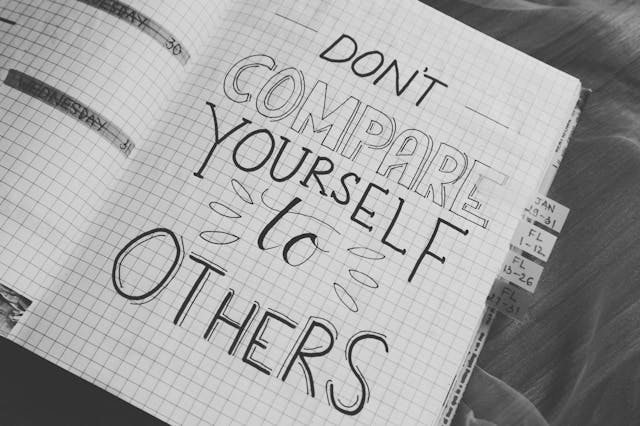
Social Comparison: How It Impacts You and How to Take Control

Did you know that we spend about 10% to 12% of our waking hours comparing ourselves to others? That’s around 2 hours or more of our day! Isn’t that crazy? Now whether we realize it or not, we’re actually hardwired to do that. It’s a skill we developed early in human history to navigate our environment—to adapt, to fit in, and to survive. And while comparison was once about survival, today it shows up everywhere—on social media, in conversations, and even while watching TV.

Understanding Social Comparison: A Double-Edged Sword

You’ve probably heard that “Comparison is the thief of joy.” While that’s often true, I’m here to tell you—this statement is incomplete. Comparison, by itself, is neutral. It’s just a reflection of our thoughts. In essence, it’s a tool—like a knife or fire—a knife can cut you, or it can cut something for you. Fire can burn you, or it can warm you or even cook you a delicious meal. See, the problem isn’t that we compare. It’s in how we interpret that comparison.

Now, we generally compare in two directions—up or down. And whether it becomes a trap or a drive depends on our mindset. Here’s how this plays out: When we compare ourselves to people we think are doing better—that’s us comparing up. If this comparison leads to self-pity, self-doubt, or an endless loop of “I’m never going to be good enough,” it’s a trap—because it triggers feelings of inadequacy and insecurity, or even envy. It reinforces limiting beliefs and self-diminishing thoughts. But, when comparing up sparks inspiration, invites learning, or pushes you towards something you aspire to, it becomes a drive—it fuels your growth. And instead of feeling less, you shift to, “What can I take from this?”

On the flip side, comparing down happens when we look at those we think are doing worse than us. It becomes a trap when it fuels arrogance—when we start looking down on others—or when it makes us lower our standards and settle for less. Do you see how that works against you? But, when comparing down makes us feel grateful and appreciative of what we have—and reminds us to have empathy and compassion toward others—it definitely becomes a drive. So, can you see how comparison is only the thief of joy if you let it?

The Real Impact of Comparison on Your Life

Here’s a distinction most of us fail to realize—comparison is never actually about the other person. We don’t compare because we want what they have. We compare because we’re afraid of what it says about us. And comparison doesn’t just mess with our self-worth—it spills into every aspect of life—work, relationships, and even parenting. It can show up anytime and catch you off guard.

Imagine catching up with a friend. They casually mention their exciting travel plans or an incredible trip they just had. Then they turn to you and ask, “What about you?” And suddenly, without even thinking, you find yourself stretching the truth and saying, “Oh yeah, we’re also thinking about a staycation soon!” When? Where? What?!! That’s how fast comparison hooks you. It’s not just about wanting what they have—it’s about suddenly questioning what you have. Can you relate?

It can even cause what I call ‘Milestone Anxiety’. Picture this—you’re scrolling on social media, and someone posts a huge achievement—career, fitness, family, whatever. Two seconds ago, you were fine, life was good… but suddenly, you’re feeling behind. I personally experienced this with potty training for my son. Before he reached that milestone, a lot of people had an opinion of when I should have started and how I should be doing it. It really made me question myself and even, I became harsh on him. I had to remind myself that, “I know my life best! I’m doing what I can.” And honestly? He’s not going to go to college in a diaper! (I actually said that to them.) And sure enough, he grew out of it. But can you see how milestone anxiety got to me—how it affected my judgment and even my behavior? I’ve seen marriages crumble because one partner was constantly measuring their life against others. The truth is—it’s not about the trips. It’s not about the money. It’s not even about the other person. It’s about this invisible pressure to match a moving target.

“Comparison reflects our fears, not others’ lives.”

Practical Steps to Take Control of Comparison

But here’s a secret— “Comparison is a perspective game.” And you’re better off mastering it in a way that serves you. So, how can you do that? Here are three quick steps to take back control when comparison hits and it isn’t working in your favor!

Step 1: Catch Yourself in the Act

You cannot stop what you don’t recognize. And comparison can happen FAST—so the trick is to interrupt it before it spirals. Maybe it’s in the middle of an Instagram scroll or during a conversation with your braggy coworker. Pause for a moment and recognize it. “Oops, I’m doing that comparison thing.” For me, I literally talk to myself: “Hmm, I see what’s happening here… I’m about to ruin a perfectly good day over nothing. Let’s not do that.” Or sometimes, I hear that buzzer sound in my head—”ERRNT! Watch out!” Whatever works for you—do it. It might sound silly, but it works. Especially if you keep at it. Because it’s not about fighting comparison; it’s about catching it before it takes over.

Step 2: Call It Out

Name what’s happening—verbalize your awareness. “Hmm… I’m feeling jealous.” Or maybe it is “I’m comparing my worst to their best.” “I’m doubting myself.” See, this little mindfulness trick of pausing and putting a name to it gives you a split-second of distance and sometimes, that’s all you need to wake up and take back control. Whatever you’re feeling or thinking isn’t necessarily good or bad—it just is. And all you need to do is to acknowledge that it exists in the moment. The point is to detach from the emotional charge of comparison and to simply observe what’s happening.

Step 3: Redirect Your Energy

If the comparison is touching on some of your insecurities or negative emotions, how can you turn it around? There are a number of ways you can do that: You can start by switching your focus in the moment to what you have versus what you’re missing because engaging in gratitude is always a great idea. Or, you can remind yourself that your journeys and circumstances are different. Or, you can just simply recognize that you are only seeing what they choose to share and you don’t have the full picture. Another powerful way to do that is for you to remind yourself of your uniqueness. Because whether you allow yourself to see it or not, you are unique! Reinforce that in yourself: “They are great and I am too—in my own way”. If anything, this is your sign to ‘practice seeing the good in you’ because this is the one skill that unlocks your self-mastery. And to physically redirect your energy, try a simple movement or a gesture to snap out of it. You can literally snap your fingers, shrug your shoulders and take a deep breath, or shake it off your body. Whatever helps you to reset—just do it.

Reflective Methods to Turn Comparison Into a Positive Force

If after these 3 steps you still feel the weight of comparison, and you want to leverage on what’s happening and dig deeper, here are 3 self-reflection methods, you can use:

The Curiosity Method

Number 1 is what I call The Curiosity Method. Ask yourself, Why? “Why am I doing this?” And don’t stop at the first answer—ask “why” at least three times to get to the root of your feelings. Why did I say we were planning a staycation? Because I didn’t want to seem like I was missing out. Ok. Why does that matter? Because I want to feel like I belong. Ok. Why do I feel like I don’t belong? Because I tie my worth to how my life looks and not how it actually feels. TADA! You got it. It was never about the vacation. It was about validation. Or maybe when you ask yourself ‘Why does that matter?’ you realize you actually haven’t had a break in a while and that you need to prioritize rest. In that case, the comparison wasn’t about feeling behind—It was an eye opener, a reminder of the importance of downtime and connection. By engaging in curiosity and asking why repeatedly, you get to the core of it, whether it’s a value, a habit, reminder, pattern, or fear that is driving your emotions. Once you get to the bottom, acknowledge it and move forward.

The “Who Cares?” Method

The second method I use is to Ask “Who Cares?” To be clear, it’s not meant in a dismissive way like “Ugh, who even cares?!”. It’s more of a quick reality check to help you understand why something is bothering you. Because a lot of times we get caught in comparing ourselves over things we don’t even actually value—we think we should have XYZ because society, family, friends expect it. But by asking “Who cares?”, you might realize, “Wait, do I truly care about having the Pinterest-perfect home, or am I just feeling like I’m supposed to?” If the honest answer is “No one that matters cares including me,” then give yourself permission to drop that comparison. If the answer is “Well, I care because this is important to me,” then great – now you know this is a personal interest or goal, and you can shift from comparison to action: “how do I get there?”. Essentially, “Who Cares?” helps differentiate between comparisons that are tied to your authentic goals versus those tied to external approval. It’s a quick way to snap back to your priorities.

Reframe Comparison as a Learning Opportunity

The third and final method is to Reframe the Comparison into a Learning Opportunity. Turn on the learner mode. Instead of thinking, “They’re better than me,” ask yourself, “What can I learn from them?” Think of them as a case study or as a sample of what’s possible for you. Shift your focus from comparison to inspiration. What techniques do they use? What skills have they developed? How often do they practice? This mental pivot transforms the other person from a perceived threat into a mentor-by-example (even if they don’t know it). It shows you what’s possible with consistency and dedication. What can you take from their journey to fuel your own growth? Is there a small step, a new habit, or an approach that could help you get closer to your own version of success?

Making Comparison Work for You

Now, these methods are not a one-size-fits-all, try what resonates with you and see what sticks. Or better yet—drop a comment and share what works for you! Let’s all help each other break free from disempowering comparisons. And of course, you can always share this video (and don’t forget to subscribe). Remember, comparison is a natural human tendency. The goal isn’t to never compare—we’ve established that’s unrealistic. The goal is to catch yourself in the act and pivot. Either stop the comparison or turn it into something positive. Because here’s the thing: The difference between those who suffer from comparison and those who control it comes down to mindset and habits. Are you going to let that 10–12% of your thoughts steal your joy, or are you going to recruit them to improve your life?

Let’s be real—no one has it all figured out. Not even the people you admire the most. They have their own doubts, insecurities, and struggles, just like you, trust me! If you keep measuring yourself against others, you’ll never feel satisfied—because the truth is, there will always be someone ahead of you and someone behind you. The real question is: Will you let that fuel you, or will you allow it to bring you down? I know you’ve probably heard this a million times, but seriously—instead of measuring yourself against others, look at how much you’ve grown. Your timeline is yours. It’s You vs. You.

So the next time you catch yourself in the comparison cycle, remember you have the power to turn it into a tool. Because in the end, it’s all about your perspective and the story you tell yourself. Trust me, this shift can make all the difference in your life! Now, go out there and beat your own yesterday! And always remember: You’ve Got This! I’ll see you in the next one. Ciao!

Frequently Asked Questions About Social Comparison

What is social comparison and why do we do it?

Social comparison is when we evaluate ourselves by comparing our abilities, achievements, or situations to others. It’s a natural tendency rooted in our evolutionary need to navigate our environment, adapt, and survive.

How does social comparison affect mental health?

Social comparison can lead to feelings of inadequacy, self-doubt, or envy when comparing up, or arrogance when comparing down, impacting mental health negatively. However, when used as a drive for inspiration or gratitude, it can positively influence well-being.

How to stop comparing yourself to others on social media?

To stop comparing yourself on social media, catch yourself in the act, name the feeling (e.g., “I’m feeling jealous”), and redirect your energy by focusing on gratitude, your uniqueness, or what you can learn from others.

What are the benefits of positive social comparison?

Positive social comparison can spark inspiration, encourage learning, fuel personal growth, and foster gratitude and empathy, turning comparison into a drive rather than a trap.

How to overcome milestone anxiety caused by comparison?

Overcome milestone anxiety by recognizing comparison triggers, verbalizing your feelings, and redirecting your focus to your unique journey and progress, using methods like curiosity or reframing comparisons as learning opportunities.

Why does comparison make me feel behind in life?

Comparison can make you feel behind because it creates an invisible pressure to match others’ achievements, often tied to societal expectations or personal fears about self-worth, rather than focusing on your own timeline.

How can I turn comparison into a tool for self-improvement?

Turn comparison into a tool by catching and naming the comparison, redirecting your energy to gratitude or learning, and using reflective methods like asking “Why?” or “Who cares?” to align with your authentic goals.

How to Boost Confidence by Avoiding Two Common Habits

Are you unknowingly undermining your confidence with everyday habits? Many people wonder, “Can being too polite and too humble actually make you feel less confident or make other people see you as less confident?” The answer lies in two common behaviors that might be secretly eroding your self-assurance. In this article, we’ll explore these habits—over-apologizing and downplaying compliments—and provide practical tips to help you build confidence. Stay with us to learn actionable steps and discover the story that inspired this insight.

Habit 1: Over-Apologizing and Softening Requests

The Problem with Over-Apologizing

Have you ever noticed how often we use the word sorry even when nothing is really wrong? Phrases like “Sorry to bother you,” “Sorry for asking,” or “Sorry to take a bit of your time” are common, but they can have a surprising impact. We say sorry out of habit and it sounds polite, right? But what happens when we overuse it? When you usually start a conversation with words like sorry, you start with a lower power word, a word that by default signals that something is wrong.

Research shows that regularly saying sorry for minor things like asking a question or making a simple request can actually lower your confidence and reinforce feelings of low self-worth. It can also make you less assertive, which means you stop speaking up. You stop standing up for yourself, including your opinions, your needs, and even your boundaries. The more you say words like sorry, the more you internalize the idea that you’re always at fault, signaling, “I’m an inconvenience, I’m a burden, I’m getting in the way, I’m bothering them, I’m taking up space that I shouldn’t be taking.” And slowly, this becomes your own inner story.

Your brain believes the words you repeat. That someone is your brain, and it’s actually taking it personally. Words have a psychological impact on us. They shape our thoughts, our emotions, and our behaviors. And the words we repeat the most can affect how we see ourselves, and also how others see us. It doesn’t just change how you sound, it changes how you feel about yourself. And it somehow shrinks your presence even before you speak your thoughts.

How to Stop Over-Apologizing

Here are three simple steps to stop over-apologizing unnecessarily:

  1. Start Noticing: Catch yourself in the moment because you can’t change what you don’t notice. Ask yourself, “Do I say sorry for anything and everything? Did I do that today? Do I actually need to say sorry in this situation?” Awareness is your first shift.
  2. Change Your Words: Instead of “Sorry to bother you,” simply say “Excuse me.” Instead of “Sorry to ask you this,” try saying “Mind if I ask you a question” or “I’d love to get your thoughts on something if you have a minute.” If you’re someone who says “No worries” a lot, try replacing it with “It’s my pleasure” or “You’re welcome.” And instead of “No problem” when there is really no problem, say “It’s all good” or “Thank you.” Even when you do make a real mistake and you want to own it, instead of saying, “Oh, my bad. I’m sorry. I didn’t notice that,” simply say, “I see what happened here. Thank you for your understanding. I’ll work on it,” or “Thank you for bringing it to my attention. I’ll fix that.”
  3. Pay Attention to How You Feel: Notice the difference in your tone, in your facial expression, and body language when you replace apology with gratitude or assertiveness. “Sorry I’m late” versus “Thank you for waiting” or “Thank you for your patience.” Do you notice the shift? The difference might seem subtle or small, but it reminds your brain that I’m allowed to take space.

Saying sorry isn’t the problem. Over saying it is. So, choose words that empower you and empower your body so your confidence can shine through.

“Words shape your confidence; choose them wisely to empower yourself.”

Habit 2: Downplaying Compliments and Forgetting to Admire Yourself

Why Downplaying Compliments Hurts Confidence

Have you ever noticed how hard it is for some people to just take a compliment? When someone says, “Wow, you did an amazing job,” do you find yourself smiling nervously and saying, “Oh, that was nothing” or “Anyone could have done that”? Sounds familiar. Saying that once or twice is one thing, but when it becomes a habit, that tiny moment of so-called modesty or humbleness starts to quietly steal your confidence.

If you grew up in an environment or a culture where standing out wasn’t really encouraged, like in an Asian or Middle Eastern collectivistic society, then getting a compliment or talking about your achievements might feel uncomfortable. And if you’re a high achiever, you might not even feel like you did anything special. It’s just your normal. You move fast. You juggle a million things. And when someone says, “Wow, that was impressive,” your brain goes, “That really? That’s just part of my Tuesday.”

When you always brush off compliments, your brain starts skipping over your wins completely. According to research on self-perception and neural reinforcement, every time we downplay a success, regardless of how small or big, we’re training our brain not to register it. We’re telling it this doesn’t count. And if your brain never gets to count the wins, it never builds the confidence that comes with them. You stop seeing your impact. You forget how far you’ve come. And you lose the internal proof that says, “Yes, I’m capable. Yes, it’s okay to celebrate me.” And here’s the irony: We admire others all the time. But when we are given the chance to be admired and appreciated, we shy away from it. So why are you leaving yourself out? You deserve to be acknowledged and celebrated.

How to Accept Compliments Confidently

Start small. When someone gives you a compliment, train yourself to at least say, “Thank you.” That’s it. Take it in. And if you have the urge to follow with something, do not follow with the word “but.” Don’t say “Thank you but it’s just luck” or “Thank you but it’s just nothing.” Don’t half receive it. Don’t twist it around from accepting then dismissing. Even if it was a group effort, acknowledge your part. Instead of saying “Thanks but it was the team,” say “Thank you and I’m proud of how we all work together to make it happen.”

Here are a few simple phrases you can use:

  • “Thank you for noticing. That is considered of you.”
  • “That is really kind of you.”
  • “Thanks. It means a lot to hear that.”
  • “I appreciate you for noticing and letting me know.”

And don’t forget to smile because just by receiving the praise, you’re allowing your brain to register the win and you are reinforcing confidence. Bill Treasurer, the author of Courage Goes to Work, says that accepting praise is actually a form of courage because you’re not hiding from it. You’re standing in the truth of what you did. So, be courageous and receive it.

If it still feels awkward to receive praise or to talk about your wins, build the habit of noticing your own achievements. Write them down. Keep a list somewhere of the things that you do in your notes app, your planner, your calendar, even if it’s part of your normal, even if no one actually sees it. Let your brain get used to counting your wins and be proud. Remember, modesty is beautiful, but when it’s overdone, it starts messing with your mastery, and you deserve to shine just as much as anyone else.

“Accepting compliments builds confidence by celebrating your wins.”

The Story That Sparked This Insight

I was at the bank the other day waiting for my turn when a woman walked in and quietly sat across the room. From the moment she entered, she kept saying, “Sorry, sorry. Can I sit here?” even though the waiting area was almost empty. “Sorry for asking, but you know what time it is?” Even when she dropped her sweater, she said, “Sorry,” as if her presence was somehow a problem. A few minutes later, I complimented her. I said, “The color of your sweater really suits your skin.” She gave a quick uncomfortable smile and said, “Ah, really? It’s just my daily sweater. Nothing special.” Then she turned her head away. That’s when the woman sitting next to me leaned in and said, “Nice people aren’t confident.”

Maybe the other woman was just having one of those days, but the impression she left was of someone who didn’t feel okay taking up space, even when space was clearly available. So, here’s your reminder: Think before you say sorry and save it for when it’s truly needed. Say thank you when someone compliments you and let it land. And cheer for others, but don’t forget to cheer for yourself, too. Because you’re doing better than you think. And when you’re kind to you, you’re not just being nice, you’re teaching your brain how to believe in you. And you’re building real confidence.

“Kindness to yourself builds confidence that shines outward.”

Key Takeaways for Building Confidence

There you have it. Being nice and kind is awesome, but being so nice and kind to everyone else that you don’t notice how you’re being unkind to yourself, that’s where confidence starts to fade. Nice people are not confident. You think so? That’s what someone told me the other day and it made me really wonder. By addressing habits like over-apologizing and downplaying compliments, you can take control of your confidence. Start noticing your words, choose empowering phrases, and accept praise graciously. These small changes can make a big difference in how you see yourself and how others perceive you.

If this hits home, consider sharing this article with someone who might benefit. And always remember, you’ve got this.

Frequently Asked Questions (FAQs)

Why do nice people struggle with confidence?

Nice people are not confident. You think so? That’s what someone told me the other day and it made me really wonder. Over-apologising and downplaying compliments can reinforce feelings of low self-worth, making it harder to feel confident.

How does over-apologising affect self-confidence?

When you usually start a conversation with words like sorry, you start with a lower power word, a word that by default signals that something is wrong. Research shows that regularly saying sorry for minor things can actually lower your confidence and reinforce feelings of low self-worth.

What are some alternatives to saying “sorry” unnecessarily?

Instead of “Sorry to bother you,” simply say “Excuse me.” Instead of “Sorry to ask you this,” try saying “Mind if I ask you a question” or “I’d love to get your thoughts on something if you have a minute.” These phrases maintain respect while boosting confidence.

Why is it hard to accept compliments?

If you grew up in an environment or a culture where standing out wasn’t really encouraged, like in an Asian or Middle Eastern collectivistic society, then getting a compliment or talking about your achievements might feel uncomfortable. Downplaying compliments can also stem from a habit of modesty.

How can I learn to accept compliments confidently?

When someone compliments you, train yourself to at least say, “Thank you.” Avoid following with “but” to dismiss it. Use phrases like “Thank you for noticing. That is considerate of you” or “I appreciate you for noticing and letting me know” to reinforce confidence.

How can I track my achievements to build confidence?

Build the habit of noticing your own achievements. Write them down. Keep a list somewhere of the things that you do in your notes app, your planner, your calendar, even if it’s part of your normal, even if no one actually sees it.

Why is accepting praise considered courageous?

Bill Treasurer, the author of Courage Goes to Work, says that accepting praise is actually a form of courage because you’re not hiding from it. You’re standing in the truth of what you did.

Overcoming Rejection: Strategies to Heal and Grow

Rejection is one of the most painful experiences that a person can go through. Which really sucks, because it’s something that without fail, absolutely, every human being is going to go through and has gone through, probably many many times. This article explores the nature of rejection, its emotional impact, and actionable strategies to cope with and grow from it, helping you transform pain into personal growth.

Understanding the Pain of Rejection

Rejection can apply to almost anything, but when we’re having this conversation about this issue we have with rejection, what this really is about is you being dismissed as inadequate, inappropriate or unwanted. It’s essentially somebody saying a “no” to you in a situation where you need them to say a “yes” to you, because doing so would mean that they recognize your value. It would mean that you’re wanted and that they see you as appropriate. They recognize your value.

The first question that you’re gonna ask yourself when you get rejected is: Why me? Why am I the one? You’re also gonna slip into thinking like this: Well, if they don’t recognize my value, maybe the value isn’t there. This type of thinking is perfectly normal. It’s perfectly natural. And in fact, it’s the reaction that all people have. All pain boils down to some form of separation. When someone says no to you or something about you, it is felt as a push away.

The deepest need of the physical human is closeness and connection. We’re biologically wired to maintain closeness with tribe. Our survival depends on it. And so we are wired to feel actual physical pain when we are at risk of ostracization. So it would stand to reason that the deepest pain is to be pushed away by someone. It usually causes us to go into fight or flight mode, doubt our own value, fear that we may never get our needs met and to feel really really really lonely. This is compounded by the fact that when our self-esteem dips in order to avoid the pain of more rejection and feelings of inadequacy, we tend to isolate ourselves.

“Rejection triggers a primal fear of separation, threatening our fundamental need for connection.”

Why Rejection Hurts So Much

You’re not going to be able to get rid of your need for social acceptance and social closeness. This is as ridiculous as expecting a fish to suddenly not need a school of fish. For this reason, if you’re struggling with rejection or the fear of rejection, you would benefit immensely by reading my book: The Anatomy of Loneliness (How To Find Your Way Back to Connection).

Strategies to Cope with Rejection

Instead of spending a lot of time helping you understand rejection and why you’ve got such an issue with it, because it’s completely natural normal, I’m going to instead, dive straight into giving you strategies for how to deal with the pain of it. And how to change your perspective about it. The only thing that makes it so that pain of rejection doesn’t turn into suffering, is what you do about it. And that’s what I hope to help you with in this episode.

1. Rejection is Not Validation

Believe it or not, most people who have issues with rejection, take each rejection as a validation of something that is true. Just because somebody rejects something about you does not mean that thing is actually bad or wrong, or actually will be unwanted by everyone. I’ll give you an example; I want you to imagine that you grew up in a society that taught that blond hair was like a curse by the devil. Obviously people are not going to accept you in that type of a society, for being blonde. But those of us who live in this society, know that that’s ridiculous. It’s completely stupid. I mean there’s nothing about being blonde that is innately bad or wrong. It’s just somebody’s perspective. So you really need to see that there’s a difference between I’m being rejected because it’s the truth that this is unwanted and bad and wrong, and I’m being rejected, because somebody’s perspective is that they don’t want it and that they think it’s bad or wrong. Rejection is not validation.

2. Face Your Emotions About Rejection

Face your emotions about the rejection. You’re gonna get nowhere, I mean literally nowhere, with ideas like: “Just stop caring what other people think” it’s not gonna happen for you. And there’s a lot of problems with doing that to begin with, which I’m not gonna get into in this video. You’re not gonna get anywhere by telling yourself: “It’s no big deal”. It is! All forms of rejection are immediately painful to a physical human. What makes the difference in recovery is how that person deals with that pain, or doesn’t deal with that推

System: that pain. If you suppress, deny, ignore or bulldoze emotions, they’re only going to amplify the problem. So admit to how you feel. Having feelings does not make you weak, quite the opposite. If you need help with this, you can watch my videos titled: How to Feel & How to Express Your Emotion. And when you find these emotions, treat yourself with compassion.

3. Practice Self-Compassion

Now this is following right in suit with the last point: Treating yourself with compassion. When we’ve been rejected, what we deeply deeply need is to be in a space of self-acceptance, self love and self compassion. And yet we don’t. In fact, when we get rejected we do the exact opposite. We slip into a pattern of internal triangulation. We try to establish closeness and rapport with whoever has rejected us, by also turning against that part of ourselves. We start to beat ourselves up, we start to devalue ourselves, we start to make ourselves feel like crap and the idea that if we do that hard enough, we’re gonna change somehow, in order to be loved by them. If you want to understand more about this, you can watch my video titled: Self Hate (The Most Dangerous Coping Mechanism). This only backfires in the end, because we’re essentially kicking ourselves when we’re already down. We become furious because we feel powerless to beat ourselves into becoming whatever we believe would make us loveable. The fear we feel because of this powerlessness converts itself into aggression and rage. We in essence, begin to reject ourselves in response to rejection. We need to practice the opposite, self valuing, self acceptance, self love and compassion towards ourselves. For more information about this, watch my video titled: Compassion (And How to Cultivate Compassion). You will also immensely benefit by doing parts work if you’re slipping into this dynamic. Because there is a part of you that is doing the rejecting internally and a part that is being rejected. Within you. You can talk with these two parts to find a way to, let’s call it, resolve the conflict between the two in this particular circumstance. To learn how to do this, watch my video titled: Parts Work (What is Parts Work and How To Do It?

4. Redefine Your Sense of Value

So many people are suffering from terribly low self-esteem. Of course this low self-esteem originates, you guessed it, from childhood. And it’s compounded in our experiences in our adult life. It essentially develops when we don’t feel as if we are valued by our family, by our peers, by the people in our childhood environment. When we value something, we regard it as having worth, because we see it as useful, beneficial and important. This right here, by the way, is where you can completely change your identification with the concept of value. And you can change it in this way: A value is entirely dependent upon needs. Worth is an abstract concept. You cannot objectively determine the value of something. Worth has no basis in reality because it’s entirely subjective. And it’s a guarantee that you or the things about you will be seen as valuable to someone and completely valueless to someone else. If value were entirely based on needs, the most important question to ask yourself is: “Who needs me?” The second most important is: “What do I need about me?” To understand this concept of depth, watch my video titled: The Value Realization.

5. Heal Childhood Wounds

When we struggle with rejection in our adult life, it is an absolute guarantee that we have unhealed childhood wounding around rejection. You can think of fixing this childhood wounding about rejection as repairing a crack in the foundation of the house of your life. For this reason, it would really benefit you to learn the completion process and to start practicing that process on yourself. If you’re interested in this, I have a book that I wrote all the details about this process in, that it’s quite literally titled:

6. Adopt a Growth Mindset

People who really suffer from rejection tend to have fixed mindsets. What I mean by this, is that they actually believe that change is not possible. They don’t actually believe in the potential for growth or for improvement, even. Another way of saying this, is that people who suffer from rejection to a really extreme degree, tend to be the very people who feel extreme amounts of futility and powerlessness relative to their capacity to change anything for the better in their life. This is why rejection makes them feel hopeless about the future. Anytime they get rejected, they don’t feel like they can change anything about why they’re rejected and they start to read into what that means for their future. So you can understand this concept, I’m gonna give you an example; Let’s start with a guy who has a fixed mindset. This is somebody who feels really powerless relative to creating any kind of change. He sort of sees things as like fixed and absolutes and therefore let’s call it, a bit of a death sentence. All right, so let’s pretend that this guy is not particularly intimate. He regards things as fixed, so he doesn’t think he can really change anything about becoming more intimate and he’s also telling himself a story based on what he’s experiencing with this woman who’s rejecting him for the fact that he’s not intimate, that no woman is going to be okay with him because of the fact that he’s not intimate enough. Obviously, do you see the hopelessness about the future is “nothing about that can change”? And also, there’s this globalization of powerlessness about the fact that no woman will ever want him because of the way he is? It’s important to change to a growth mindset. A mindset that does not see things as set in stone. Most especially the self. Our personalities and behaviors are in essence adaptations to our environment. This means authenticity and integration and healing will absolutely change your personality and behaviors. Life is flexible and you are flexible. Face and seek to understand and change your perspectives regarding your own perceptions of powerlessness and your perceptions that things are fixed and unchangeable and therefore inevitable.

“Embracing a growth mindset transforms rejection into opportunities for personal evolution.”

7. Seek the Real Reason Behind Rejection

So much about the fear of rejection is because we do not have close enough and intimate enough relationships with other people. I know that at face value this isn’t going to make sense to you, so bear with me. How many of us honestly when we experience a rejection, take time to try to figure out why and part of that process is asking “why?”. We don’t ask enough questions. We don’t see into people, feel into people, listen to people, try to understand them and ask them things, so as to really ascertain the true meaning that exists in a given circumstance. This wickedly prevents us from growth. Instead, what we do is we stick with our own needs. We stick with our own self, we stick with her own story. We tell ourselves all kinds of stories about why we’re being rejected. And by the way, most of the time, we’re not accurate, at all. For more understanding about this, I want you to watch my video titled: Meaning (The Self-Destruct Button). Essentially most of us are not brave enough to find out the real reason why. Obviously, finding out the real reason why would change things for us wouldn’t it? We need to be brave enough to initiate putting energy forth towards learning from the rejection. Spending the time and energy in order to totally understand the real reason behind why we are being rejected by them, can do one of two things: 1. It can make us self aware. This puts us in a place of choice. We often don’t understand how we are being perceived by others. Look, we all have this friend or this person in our life where we know exactly what they are doing or not doing that’s making it, so we’re not inviting them to that party. Yet, we’re too afraid to tell this person to their face. Now I want you to think about this, if you were that person, would you want to know? Would you want to know that reason that all the people in your life don’t want you there? My answer is yes. What’s your answer? By knowing that answer, you can decide whether it’s right to change it, or to commit to it further. Often this process of really putting in the effort to really find out in a very open way. Not a defensive way. Why? “Why are we being rejected in this circumstance?”, often leads us to understanding that it has absolutely, nothing to do with us and so much to do about them. If you have any doubt about this, I want you to remember that there are really valuable things that are being rejected every day because people can’t afford them. It also has the capacity to bring to the forefront the reality that incompatibility is what is happening in a circumstance. Incompatibility can happen in any situation. I mean romantic, businesswise, familywize, I mean literally any type of a setting. And the thing to understand about incompatibility is it has nothing NOTHING to do with your self-worth. I mean literally nothing! This person’s right for what they want and what their truth is. This person’s right for what they want and what their truth is. It’s just, putting the two together creates catastrophe. But that doesn’t need to mean anything about you being bad, or wrong, or unwanted, or having no value. To understand this concept in depth, watch my video titled: Incompatibility (A Harsh Reality in Relationships). Be brave enough to stop telling yourself stories about why you’ve been rejected. And be brave enough to really ask people why. Roll out the red carpet and try to make it as safe as you possibly can, and tell them: “I want the brutal honest truth, like, what would you say behind my back?”

“Understanding the true reasons for rejection fosters self-awareness and growth.”

8. Use Rejection as a Compass for Direction

Something that people who aren’t suffering because of rejection know that people who are suffering from rejection don’t seem to know is that out of rejection, can come your strongest sense of direction. I often talk about emotions serving as a kind of compass that can roughly point you through life. We all know there are some shadows there, but let’s just consider this for a moment; Rejection can be a compass as well. This is even more the case when you’re brave enough to discover the real reasons why. For example, I know a man who discovered that the real reason that he was being rejected by women in his life, pretty much immediately, after he got into relationships with them, was that they all perceived him to be totally unavailable. After knowing this, he got to sit down with himself and look at that truth. What he admitted to himself is that actually his real priority is not relationships. His real priority is his work. Relationships are a: “when I’m not working, I like to have a relationship. So instead of doing what another man might do, which is: “You know what, I’m gonna prioritize my relationships and work on how to develop intimacy. This man decided the opposite: “What’s right for me actually, is to have casual relationships with women. Women who are super super busy themselves, who just want to get together have sex, go to dinner.” “That’s what’s right for me.” And as a result of going in that direction, He lives a much happier life today. And because there’s not the incompatibility of trying to be with a woman who really needs him, He’s not hurting everyone around him as well. To use myself as another example, in the beginning of my career I was rejected by all kinds of people who hold spiritual seminars. When I really got honest with these people about why they didn’t want to have me showing up at these events, the answer was pretty much unanimous. It’s that: “Teal when you give talks people aren’t leaving the room feeling amazing. And you have to get from our perspective, people aren’t gonna come back next year, unless they feel amazing after your talk.” Now one person might hear that feedback and go: “Crap, I should definitely be designing my speeches so that they’re more feel-good and more inspiring for people. But, this is what I’m saying about personal direction, when I really sat with that, I really thought about whether that was in alignment with my own authenticity and my own unique talents, and it’s not. I realized that my gifting is to tell people the honest truth, regardless of whether or not it feels like crap. So actually, what I decided was right for me is not to partner up with these seminars, where that’s their need for their speakers. It’s to do my own events, where the people sitting in my audience are completely dedicated to reality and knowing the truth, even if it hurts. It was the best decision I ever made. The point is, rejection can give you your strongest sense of direction if you let it. You can turn rejection into something that dramatically benefits your life.

“Rejection can guide you toward your true path and purpose.”

9. Seek Belonging and Connection

Reach out to people or to groups that you feel affinity with, where you do feel valued, where you do feel like you’re wanted and needed. Really initiate learning how to develop deep meaningful friendships with people. When we’re afraid of rejection or experience the pain of rejection, we compound our own ostracization by isolating ourselves and by adopting behaviors that guarantee further ostracization. When we really need to do the opposite. When we experience this pain of rejection, we become emotionally and even physically inflamed. Now because of that inflammation, we actually need to seek out relationships that are soothing to the parts of us that are damaged by rejection. We actually experience deep levels of soothing when we’re around these people or seeking out these people who we actually feel might value us. Also, if you’ve experienced a rejection, what its destabilizing is your sense of belonging. If you deliberately initiate seeking out the people in your life who actually might value you, you’re gonna re-stabilize the sensation of belonging. Obviously if we’ve been rejected our need for belonging is threatened. You need this need to be met. For this reason, you would benefit by watching my videos titled: Belonging And How to Belong as well as, Instant Belonging. Pain is pretty cunning. It tries to convince you that you’re the only one that’s in it. That you’re the one that’s being rejected when everyone else is being accepted and valued and loved. This just quite literally is not the case. Absolutely everyone is being rejected. And in fact, the most lovable characters throughout history, think Jesus, think Martin Luther King, think Nelson Mandela… Were rejected to the degree that they were jailed if not killed. So… So rejection is not an indication about your personal worth or your loveability. Everyone feels pain when they are rejected. Everyone. What determines whether that pain turns into suffering is simply how somebody deals with the pain. It depends on whether a person uses it to find deeper awareness, personal truth and direction. And I want you to consider this: I mean deeply consider it, that when you feel as if you’re being rejected and therefore prevented from having something good, this may just be the universe’s way of directing you straight towards something better. Have a good week.

“Connection with those who value you heals the wounds of rejection.”

FAQ: Long-Tail Questions About Overcoming Rejection

How can I stop feeling worthless after being rejected?

You can stop feeling worthless by recognizing that rejection is not validation of your worth. Practice self-compassion, face your emotions, and seek connections with those who value you. Watch videos like “The Value Realization” to reframe your understanding of self-worth.

What are practical ways to deal with rejection in relationships?

Face your emotions honestly, practice self-compassion, and seek the real reasons behind the rejection by asking questions. This can reveal incompatibilities or areas for growth, helping you move forward without self-blame.

How does childhood rejection affect adult life?

Childhood rejection creates unhealed wounds that amplify rejection sensitivity in adulthood. Engaging in processes like The Completion Process,

How can I develop a growth mindset to handle rejection better?

Shift from a fixed mindset by embracing the belief that change is possible. Recognize that your behaviors are adaptable and use rejection as feedback for growth, as explained in the video “The Value Realization.”

Why does rejection feel so painful physically?

Rejection triggers physical pain because humans are biologically wired for closeness and connection. Being pushed away activates a fight-or-flight response, causing real physical discomfort due to our need for tribal belonging.

How can I find people who value me after a rejection?

Actively seek out groups or individuals where you feel affinity and belonging. Watch videos like “Belonging And How to Belong” to learn how to cultivate meaningful connections that restore your sense of worth.

How can I use rejection to find my life’s direction?

Rejection can act as a compass by revealing what aligns with your authentic self. By understanding the real reasons for rejection, as discussed in the video “Incompatibility (A Harsh Reality in Relationships),” you can make choices that lead to a fulfilling path.

Toxic Positivity FAQ: Understanding Its Impact and How to Address It

You may have been hearing the term toxic positivity a lot lately. Over the last four years, life in human society has become a much, much more negative experience for people. In truth, for many people, life has become so emotionally hard to deal with that they’ve turned to all kinds of coping mechanisms to deal with it, and one of these coping mechanisms is toxic positivity. It is absolutely rampant today for this reason. Let’s look at what toxic positivity is, why it is a problem, and what to do about it.

What is toxic positivity?

A person who uses positivity as a coping mechanism uses positivity to deny, suppress, disown, reject, and run away from anything they consider negative. It is an extreme form of, let’s call it, avoidant resistance. This is toxic positivity. When someone is engaged in toxic positivity, they are using positivity like a buoy that they are desperately clinging to in order to keep themselves out of reality because subconsciously they think that they cannot handle the negative aspects of reality. It’s a form of willful denial.

Why has toxic positivity become more common in recent years?

As people around the globe are feeling more and more powerless to the negative, unwanted stressors that currently exist in human society, they are turning more and more to coping mechanisms. We usually adopt a coping mechanism when we believe that the situation that is causing us distress cannot be changed and cannot be eradicated. We can’t make it better, essentially. We believe that it is out of our control to eradicate the stressor, so we’re forced to manage with it, deal with it, and adapt to it.

How does toxic positivity differ from healthy positivity?

A person who has a positive mental attitude focuses on the positives in any situation, expects good outcomes, even expects things to turn out for the best, reframes negative things in a positive light, finds the silver lining, has an optimistic outlook on life, and focuses on the desired outcome. It is easy to see how this could be a beneficial way to approach life, but there can be a really, really big dark side to positivity when it is used as a coping mechanism. Healthy positivity works when a person is looking directly at and is taking in the full reality of any given situation, this includes what some people might label as negative realities, but positivity must be authentic, not a cover that is donned to hide or avoid anything negative. Toxic positivity is a fight against what is real.

What are the main problems caused by toxic positivity?

Because of all of this, we need to weed through the reasons why toxic positivity is a problem:

  1. It distorts universal truths. It’s a reality that you live in a universe based off of the law of mirroring, also called The Law of Attraction. What this means is your external reality was designed to be a reflection of your personal vibration, but as per usual, the people who are promoting the idea of willful positive delusion are drastically oversimplifying what makes up your personal vibration and therefore why and how something shows up in your external life. Simply focusing your conscious mind on being perfectly well and on everyone around you being perfectly well does not overcompensate for embedded experiences like ancestral traumas.
  2. Toxic positivity is a resistance, a dismissal, a suppression, an avoidance of negative thoughts, negative emotions, and negative realities. It is a pushing against what is unwanted. It is a refusal to accept something. It’s a war with what is. This means it requires a great deal of energy. There’s a lot of energy going into and towards the very thing that a person’s trying to avoid, and this means they will not only persist but will grow bigger until you cannot run from them anymore.
  3. Toxic positivity is a form of denial, and as such, it will ruin your life. Denial is refusing to accept or admit to the truth or the reality of something unpleasant. It’s a powerfully unconscious state of being because to slip into denial, a person has to either stop seeing, feeling, and hearing any proof to contradict the positive, or they have to see the negative but negate it, nullify it, deny it, or minimize the impact it has on their life.
  4. Toxic positivity will destroy your relationships. When you feel like you simply cannot deal with the pain you feel in response to someone else bringing up something negative or someone else’s negative emotions, you will deny that person’s reality and refuse to accept it as true or valid. You won’t respond to it. Instead, you minimize, invalidate, and refuse to deeply acknowledge what they are presenting you with. The person is not able to be seen, heard, felt, or understood by you; therefore, they can’t be in a relationship with you.
  5. Toxic positivity shuts down authentic discussion and communication. When someone is engaged in toxic positivity, anything that is not positive is countered, is ignored, is shut down. There’s no space to come to that person who is engaged in toxic positivity with thoughts, insights, truth, or emotions that they would deem as negative.
  6. Toxic positivity induces guilt and shame for feeling bad and for having negative truths. Toxic positivity rejects all difficult thoughts, perceptions, and emotions in favor of a cheerful, falsely positive state. It is an intense and enduring pressure to feel good no matter what is happening. It carries with it the message that the thoughts and the feelings that a person is thinking and feeling are unacceptable.
  7. Toxic positivity causes an escalation of negativity in others. When someone copes with toxic positivity, it causes pain to the person, thus adding to the negativity of their life experience. Also, it is such an intense polarization that it tends to push people to the opposite polarity, which is negativity.
  8. Toxic positivity prevents growth and personal expansion. It is in the acknowledging of the negatives, as well as the exploration of them, that we’re able to gain the awareness and insights necessary to define what we want, change, and go in the right direction.
  9. Toxic positivity brings humanity ever so further into the emotional Dark Age. It is critical that we come out of this emotional Dark Age. We have to learn what emotions are, what purpose they serve, and how to respond to them. Toxic positivity makes an enemy of negative emotion.
  10. Toxic positivity is a form of gaslighting. When something negative is happening, it creates a false narrative of reality that causes people to doubt their own estimation of what is real. It makes people feel mentally ill when they are not.

How does toxic positivity affect relationships?

Let’s imagine that you feel like you simply cannot deal with the pain you feel in response to someone else bringing up something negative or someone else’s negative emotions because it makes you think negative thoughts and feel negative emotions, something you think you can’t deal with. You will deny that person’s reality and refuse to accept it as true or valid. The person is not able to be seen, heard, felt, or understood by you; therefore, they can’t be in a relationship with you, and you will not respond in a way that accommodates for their negative reality. As a result, you cannot act in their best interests. What does this mean? It means you’re going to lose their trust. Trust is the holy grail of relationships. It is the thing that is to not ever be destroyed. Toxic positivity in a relationship makes a relationship impossible.

Can toxic positivity impact mental health?

Toxic positivity induces guilt and shame for feeling bad and for having negative truths. It carries with it the message that if you are not finding a way to think and feel positive, even in the face of serious tragedy or dire circumstances, you are doing something wrong. For this reason, it compounds a person’s pain. It makes someone’s pain worse, as well as denies people the authentic support they need for what they are facing. And this is the very message that a person who copes with toxic positivity is sending to themselves every day, not just other people, without even knowing it.

How can you recognize toxic positivity in yourself or others?

Signs of toxic positivity include dismissing negative emotions with phrases like “just think positive,” avoiding discussions about challenges, maintaining a falsely cheerful facade despite distress, invalidating others’ struggles with optimistic platitudes, or feeling guilt for experiencing negative emotions. It’s a refusal to acknowledge negative realities, often accompanied by a “good vibes only” mentality.

What can you do to address toxic positivity?

If you use toxic positivity as your coping mechanism, the time has come to learn to feel your negative emotions and acknowledge your painful truths. You need to start to lean into discomfort and practice moving towards it instead of away from it. Whenever you feel negative emotion, use the pain itself as a kind of meditation bell that is awakening you to the opportunity to gain valuable feedback. It is trying to tell you something. The question is, what? Try to understand what it is trying to tell you, and because of this, you’re going to be able to take the right action for yourself or for the people in your life. The “good vibes only” mantra is a societal illness. It is one that we need to remedy, especially if we want to make any genuine positive change to this human society, which is currently causing us so much distress that we feel the need to use coping mechanisms to survive it.

Why is addressing toxic positivity important for society?

Toxic positivity brings humanity ever so further into the emotional Dark Age. It is critical that we come out of this emotional Dark Age. We have to learn what emotions are, what purpose they serve, and how to respond to them. By addressing toxic positivity, we can foster emotional intelligence, authentic communication, and genuine positive change to this human society, which is currently causing us so much distress that we feel the need to use coping mechanisms to survive it.

How to Get Your Brain Back: Breaking Free from Social Media’s Grip

You know that feeling—reaching for your phone every few seconds, unable to focus on a book, a movie, or even a conversation without itching to scroll? It’s not just you. Social media’s rewiring our brains, pulling us into a cycle of distraction and dopamine hits. But here’s the deal: you can take back control. Let’s dive into what’s happening to your mind, why it’s a problem, and how to reclaim your focus in a world that’s always buzzing.

Why Your Brain’s Hooked

Think about our ancestors, hunting and gathering thousands of years ago. Their brains—same as ours—lit up with dopamine when they spotted food or danger. It was a survival thing, telling them, “Focus on this!” Fast forward to 2025, and that same brain is getting slammed with dopamine from every notification, like, or viral video. Your brain can’t tell the difference between a life-saving signal and a dumb meme. It all feels urgent.

This rewiring, called neuroplasticity, kicked into high gear around 2007 with smartphones and social media. We’ve trained ourselves to crave constant new stuff, making it hard to sit still or think deeply. Scientists call it a cognitive mismatch—our ancient brains are drowning in a digital flood they weren’t built for.

The Scroll Trap

Back in the ‘60s, a thinker named Marshall McLuhan said, “The medium is the message.” Translation: the way we get info shapes us more than the info itself. Platforms like TikTok, Instagram, or X are built to keep you hooked with quick clips, trending tags, and endless feeds. They’re not about making you wiser—they’re about keeping your eyes glued. Every second you spend is a win for what’s called the attention economy.

Then there’s memes. Originally, Richard Dawkins described them as ideas that spread like genes. Now they’re viral slang like “rizz,” “gyatt,” or “skibidi toilet” that Gen Z and Gen Alpha toss around like it’s their native tongue. Memes are fun and fast, but they’re shallow, shaping how we talk and think without us even pausing to notice.

The Cost: Brain Rot’s Real

Oxford nailed it with their 2025 Word of the Year: brain rot. Kids raised on screens since they were two struggle to focus in school. Reading books or watching long-form documentaries feels boring compared to 15-second reels. Boredom, once a spark for big ideas, now feels like something to dodge. Studies show we’re reading less, feeling more anxious, and losing our ability to just sit and think.

This isn’t just personal. When we can’t focus, we get less done. Creativity fizzles. And big problems—like climate change or global conflicts—need deep thinking, not just skimming headlines. If we’re all distracted, we’re losing our ability to tackle the tough stuff.

How to Get Your Brain Back

Good news: your brain can adapt back. It’s like getting in shape after years of chilling on the couch—it takes effort, but it’s doable. Here’s what’s worked for me and others:

  • Start Small: Don’t try to read a 500-page novel right away. Try 5 minutes of focused reading or work, then 10, then 20. It’s like training a muscle—build it slowly.
  • Hack Your Space: Keep your phone in another room when you’re working. Use apps to block distracting sites. Make focus easy and distractions hard.
  • Reset Your Dopamine: Spend 30 minutes a day doing nothing stimulating—no phone, no TV, just you and your thoughts. It’s weird at first, but it helps regular stuff feel good again.
  • Think About What You Consume: After a video or post, pause and ask, “What did I learn? How does this connect to what I know?” This small habit builds deeper thinking.

The Internet Can Be Your Ally

Social media’s a trap, but it’s also a goldmine if you use it right. I’ve learned skills, met people, and built my career online—stuff I’d never get from a classroom. The trick is picking content that actually helps you grow. For example, IBM SkillsBuild offers free courses that teach real skills employers care about. Their Build Your First Chatbot course is super cool—you learn how to make a chatbot that talks like a human in just an hour. It’s free and practical. Check it out at skillsbuild.org.

Reclaim Your Mind

Our ancestors focused to survive. Today, focusing is how we thrive. Don’t jump to the next tab right after this. Take a moment. Think: What hit home? What can you try tomorrow? That tiny pause is you pushing back against the endless scroll.

Got any tricks for staying focused? Drop them in the comments—I’d love to hear what’s working for you. Let’s help each other out.

Achina Mayya here. Thanks for sticking with me. Share this if it hit home.

FAQ

Why do I feel so restless when I try to focus?
Your brain’s hooked on quick dopamine hits from social media. It expects fast rewards. Cutting back on scrolling and trying low-stimulation moments can help reset that craving.

Is social media always bad for my brain?
Not at all! It’s a tool. It can distract you, but it’s also great for learning and connecting. Choose content that adds value, like online courses or meaningful discussions.

How do I start focusing better?
Start with 5 minutes of distraction-free work or reading. Keep your phone out of reach, and slowly increase your focus time. Think of it like training for a race—small steps add up.

Why are memes so addictive?
Memes are quick, emotional, and easy to share, hitting your brain’s reward system fast. They’re fun but shallow, so balance them with deeper content.

Can I really retrain my brain?
Yup, thanks to neuroplasticity. With consistent effort—like cutting distractions and practicing focus—you can rebuild your attention span over time.

Understanding Your Mind: A Path to Change – From Editors Desk

We cannot change the mind, but we can understand how it reacts to a situation. You know what situations are. So if you think you can change the reaction or properties of your mind, it will be an infinite fight between you and your brain—or your mind. You know what I’m trying to say—as I’ve said, “you” and “your brain” are two different things. When you know how to separate yourself from your reaction, or not the feeling, change starts. – Anshu Pathak

Explained here ——

The Mind and You: Two Different Things

Imagine your mind as a machine that reacts to situations—things like stress, joy, or challenges. These reactions, like feeling angry or anxious, often happen automatically. The writer suggests that “you” and “your mind” are not the same. You are the one observing those reactions, not the reactions themselves. For example, when someone cuts you off in traffic, your mind might instantly spark with anger. That’s your mind reacting, but you don’t have to fully identify with that anger.

Why Fighting Your Mind Doesn’t Work

Trying to force your mind to stop reacting a certain way—like telling yourself, “I shouldn’t be angry!”—can feel like an endless battle. The writer calls this an “infinite fight” because the mind has its own way of processing situations, shaped by habits, experiences, and biology. Instead of fighting your mind, the key is to understand how it responds and why.

The Power of Separation

Here’s where change begins: when you learn to separate yourself from your mind’s reactions. This doesn’t mean ignoring your feelings or pretending they don’t exist. It means noticing them without letting them take over. For instance, if you’re nervous before a big presentation, you might say to yourself, “My mind is feeling anxious right now, but that’s just a reaction—it’s not all of who I am.” By doing this, you create a small space between you and the reaction, giving you room to choose how to respond.

How to Start

  1. Notice Your Reactions: Pay attention to how your mind responds to situations. Are you quick to get frustrated? Do you feel overwhelmed easily? Just observe without judging.
  2. Pause and Reflect: When you feel a strong emotion, take a moment to breathe and recognize it as your mind’s reaction, not your entire self.
  3. Choose Your Response: Once you’ve created that separation, you can decide how to act. Maybe you still feel angry, but you choose to speak calmly instead of lashing out.
  4. Practice Patience: Understanding your mind takes time. Be kind to yourself as you learn to observe rather than fight your reactions.

A New Way Forward

By seeing your mind’s reactions as separate from who you are, you gain the power to respond to life’s challenges with more clarity and control. You’re not changing your mind’s wiring—you’re changing how you relate to it. This simple shift can open the door to real, lasting change.

Benefits of Being Short Tempered

Let’s face it: nobody likes being labeled hot-headed. The idea of having a short temper often conjures images of outbursts, awkward apologies, and strained relationships. But what if I told you that, when managed wisely, a short fuse can actually be one of your greatest emotional assets? Believe it or not, a quick trigger can help you keep stress at bay, communicate honestly, and bounce back faster than you might expect.


What Exactly Is a Short Temper?

In plain terms, having a short temper simply means feelings of irritation or anger flare up quickly in response to frustrations. It’s different from chronic, uncontrollable rage—think of it more like a pressure valve that lets off steam the moment something goes wrong. Instead of letting annoyance simmer, you address it head-on and then move on.


Why Being Short-Tempered Can Be Good: Point-by-Point Benefits

1. Rapid Release / Letting Off Steam Before It Builds Up

Ever held in frustration only to explode later—maybe at the worst possible moment? People with shorter fuses tend to express anger quickly and move past it just as fast. That immediate release means you’re not carrying leftover tension into your next meeting, conversation, or even into your sleep schedule.

Real Talk: Imagine your coworker misses another deadline. You might shoot off a quick, “Hey, this is really holding me up,” then refocus on solving the issue—no carrying grudges for days.


2. Sidestepping Emotional Overload

When frustrations pile up unnoticed, even small irritations can feel like mountains later on. Quick outbursts act like a safety valve, preventing your inner reservoir of stress from overflowing. Over time, this habit can lower your risk of chronic anxiety or low moods.


3. Encouraging Straightforward Conversations

People who express frustration in the moment rarely resort to silent resentment or sneaky jabs. They lay their cards on the table, which can actually speed up conflict resolution. When everyone knows where they stand, the chance of misunderstandings drops.

Example: In a team meeting, a brief “I’m frustrated by the unclear instructions” can prompt an immediate fix—no more guessing, no more wasted time.


4. Sparking Swift Problem-Solving

A quick temper often bubbles up because you want things fixed—now. That urgency can be a catalyst for action, pushing you to troubleshoot or brainstorm solutions immediately rather than dragging your feet.

Bottom Line: If your computer crashes mid-presentation, you’re more likely to jump into troubleshooting right away instead of stewing in frustration.


5. Building Emotional Resilience

Believe it or not, experiencing—and then letting go of—those rapid bursts of irritation can actually train your mind to recover faster. Over time, you learn that anger is fleeting, and you’ll bounce back before the day is ruined.

Insights: After a heated debate, you cool off quickly and return to your day instead of replaying every word in your mind.


6. Pushing for Positive Change

A strong reaction can signal when something truly needs to shift. Whether it’s in your personal life, at work, or in your habits, your prompt reaction highlights problem areas—and often makes you the very person who drives the improvement.

Case in Point: Annoyed by repetitive, pointless meetings? You’re probably the one to suggest a more focused agenda and end everyone’s frustration.


Why This Matters: Breaking the Stress Cycle

When we hold back anger, it lurks beneath the surface, bubbling up later in ways we can’t predict—think sleepless nights, tension headaches, or sudden meltdowns. By expressing irritation promptly, you prevent that emotional debt from accumulating, keeping your stress levels in check and protecting your mental health.


Tips for Channeling Your Temper Constructively

  • Pause and Plan: It’s okay to let off steam—but take a breath and think: “What’s the clearest way to say this?” before you speak.
  • Use a Quick Cool-Down: After an outburst, try deep breaths or a brief walk to ensure you’re ready to tackle the next task.
  • Spot Your Triggers: Notice patterns—maybe certain tasks or people consistently set you off—and find proactive fixes.
  • Aim for Solutions: When you speak up, pair frustration with a suggestion: “I’m upset this tool slows me down—can we explore an alternative?”
  • Seek Balance: If your temper ever feels like it’s running the show, consider coaching or anger-management strategies to refine your approach.

Busting Common Myths

  • “It always hurts relationships.” Not if you communicate respectfully. A well-timed, honest comment can clear the air faster than weeks of silent resentment.
  • “It means you’re unstable.” Many innovators and leaders harness a quick trigger to spark productivity and change.
  • “Suppressing anger is healthier.” Bottling up often leads to passive-aggressiveness, stress-related ailments, or epic blow-ups.

A short temper isn’t a flaw—it’s a tool. Wield it thoughtfully, and you’ll find that those split-second flares actually keep your emotional engine running smoothly. By voicing what bothers you and moving on, you dodge the traps of bottled-up stress and stale conflicts. So next time you feel that spark of irritation, embrace it, express it, and then get back to the things you love—stress-free.